11 August 2006

Anaktuvuk Pass: "place of caribou droppings"

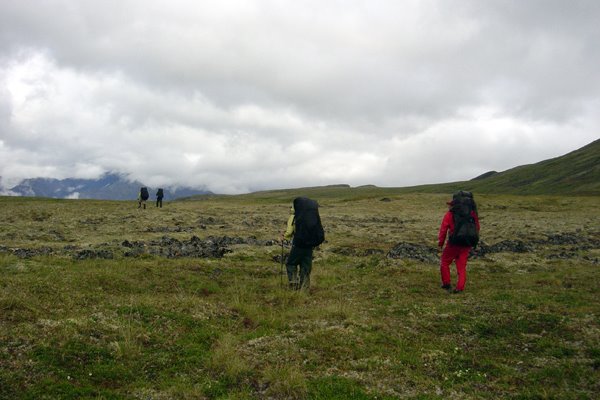
The highlight of the trip, for me anyway, may have been the finish. Hiking into a remote village at the end of a two week trip is exciting. You can almost smell the non-dehydrated food and feel the warmth of buildings from miles away. I felt like I was racing to the finish line as we approach the village.


Yet I was a little nervous, I wasn't sure what to expect of Anaktuvuk. At first I felt like an intruder, and I knew that many of the villages in Alaska are known as being rough and not very accepting of outsiders. That was certainly not the case here. The people of Anatuvuk were incredibly friendly. I lost track of how many people on the street came up to us and started talking, asking us about our trip, talking about the upcoming caribou migration, explaining how to make Eskimo band-aids. Caribou soup was being served at the community hall and we were invited to eat some. We were also told that we could come back any time, that they always like having visitors. If only I could get a glaciology position in Anaktuvuk...

The people of Anaktuvuk are Nunamiut Eskimos (inland Eskimos) with a culture very different from the Inupiaq Eskimos (coastal Eskimos). They were a nomadic group that subsisted primarily on caribou and other small game. Supposedly they were the last nomads in North America to "settle down" - Anaktuvuk was not formed until the 1950s. Its amazing to think of the changes that have occurred to these people during the last 50 years. They now have indoor plumbing, oil heating, and regularly scheduled flights bringing mail and food. They still maintain much of their subsistence ways, but have sadly all but lost their language. Very few people younger than 50 speak Eskimo. Even though almost everybody there speaks English as a first language, they do so with an accent that makes you feel like you're talking to people who speak English as a second language. We were told that the children learn Eskimo in school, but they have little incentive to use it on a daily basis, so what they learn is quickly lost.


Anaktuvuk is isolated, but the people living there certainly are not. Many visit Fairbanks a few times a year, and some are quite worldly. One person we met said that he went to boarding school in Oregon during the 1960s (it used to be that all Alaska natives were sent to boarding school far from home, to Mt. Edgecumbe in southeast Alaska, Oregon, or even Oklahoma!). After boarding school he enlisted in the military because he had a low draft number and would have been drafted anyway. He just narrowly avoided being sent to Vietnam (he loved Nixon because of that), but instead spent several years in Germany. During that time he traveled around and saw many places in Europe. I could sit and listen to him tell stories for hours. Actually, many of the people there were good storytellers; telling stories is an important part of their culture, as they didn't have written language until recently.

From the Haul Road to Anaktuvuk Pass

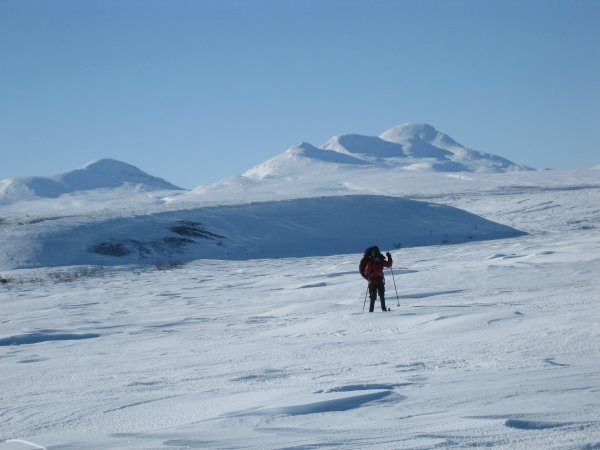
Last Friday we (me, Inari, Jason S., Elvira, and Syosaku) returned from our hiking trip in the Brooks Range. We had hiked some 60 miles (100 km) in 12 days from the Haul Road - the supply road for Prudhoe Bay - to the village of Anaktuvuk Pass. We went over several passes and past several prominent features: Kinnorutin Pass, Mount Doonerak, the Gates of the Arctic (Frigid Crags and Boreal Mountain), the Valley of the Precipices, and Ernie Pass. As Syosaku said, the scenery there isn't majestic like Denali National Park, but its very beautiful in its own arctic way.


At times the trip was quite difficult - heavy packs, wet feet, too much rain, mosquitoes, bushwhacking. And even though those things are too be expected on a hiking trip in Alaska, we were all still happy to reach our goal of Anaktuvuk Pass. After returning home we went through our photos almost immediately, and I think its safe to say that I wasn't the only one contemplating my next arctic trip.


Keep an eye on Elvira's blog (the link on the right). Rumor has it that she's planning a "Brook Range Blogging Extravaganza".

09 August 2006

Changes at NASA

Maybe this isn't news anymore, but I just learned that NASA quietly changed its mission statement to align more closely with the goals of the Bush administration. The mission statement once read: "to understand and protect our home planet; to explore the universe and search for life; to inspire the next generation of explorers... as only NASA can". The statement has been rewritten to read: "to pioneer the future in space exploration, scientific discovery and aeronautics research". This is very disconcerting to researchers who are studying climate change, as it means that a major funding agency is changing its focus away from a potential disaster on our home planet. Was this change an attempt to draw attention away from global warming, or was it just an honest attempt to more clearly seperate the various funding agencies (e.g., NASA, the National Science Foundation, the National Oceanic and Atmosperic Administration)?

21 July 2006

Whirlwind summer

Since moving to Alaska my summers have always been busy with field work, trips, gardening, fishing, and blueberry picking, but this summer has been exceptionally busy. Since returning from Greenland a little over two weeks ago I've been to Gulkana Glacier twice - once to be a witness for a wedding ceremony (in the pouring rain) and once to teach a glaciology field course (also in the pouring rain). Now that I've been in Fairbanks for a total of two weeks this summer its time to hit the road again. This time Jason S. and Elvira are coming up from Oregon to join Inari, myself, and Syosaku (another glaciology student) on a hiking trip up in the Brooks Range. The plan is to hike west from the haul road into Gates of the Arctic National Park about 70 miles to the the town of Anaktuvuk Pass. From Anaktuvuk we will catch a smallish plane and fly back to Fairbanks. The one catch is that the other Jason had a very untimely bicycling accident a week ago and initially thought that he had broken his ankle... At the moment its not clear how that will affect our trip, but I'm sure we'll figure something out. At any rate, we're excited to have our first visitors that aren't family and aren't named Take. Photos and stories to come.

20 July 2006

United 93

Inari and I went to see United 93 last night. Wow. It was much better and more powerful than I expected. It's definitely not for the light hearted. Watching the movie was probably the closest that I've come to having a heart attack. And I wasn't alone - the theater was completely silent after the movie ended, everybody was speechless. Maybe it was still too early to watch a movie about 9/11, still too painful, though the movie was very well done. I was worried that it would be a typical heroic Hollywood movie, but they did a really good job of just tellling the story - or showing it.

16 July 2006

Schweiz

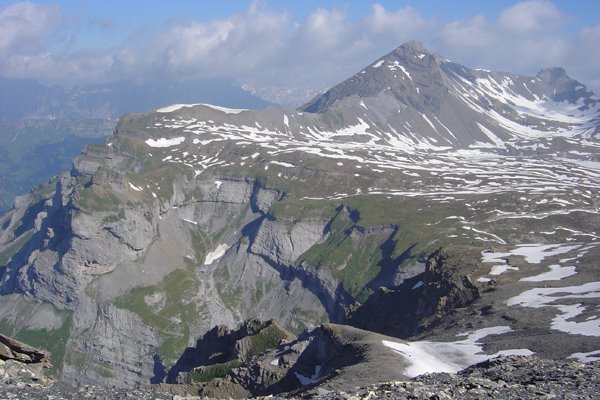
I ended up spending a little more than 5 days in Switzerland with Tinu and Elsbeth, and their 1-yr old daughter Lena. (Tinu and Elsbeth used to work in the glaciers lab in Fairbanks). They were very hospitable and really went out of their way to show me around. We did several hikes in the mountains, even spending one night in an alpine hut. Though not nearly as remote as the mountains in the U.S., the Alps are definitely impressive - and very accesible. Its very easy to travel by train to a trail head, and then hike up and over the mountains to a different town where you can catch the next train home. And of course the mountains are incredibly steep and beautiful. Its no wonder that hiking is the Swiss national sport. The huts make hiking a lot more enjoyable. You could easily do a week long hike or ski trip and only need to carry some extra clothes and lunch food. The huts have everything else you need - food, water, and beds. Here are a couple of photos from my time in Switzerland:


Eating fondue in the warm sun with Keith, another glaciologist from Fairbanks who also happened to be visiting Tinu and Elsbeth.


Can you spot the hiking trail in this photo? (Hint: it starts in the lower left corner and zig zags its way up the steep mountain.)

The coolest thing

We happened to be in Ilulissat during Greenland's National Day, which, maybe not too surprisingly, falls on the summer solstice. There were many festivities, including traditional drumming, singing, and dancing. The highlight, though, was the outdoor rock concert near the ice fjord. Somehow it was very Greenlandic - most people were carrying around bloody plastic bags full of seal meat that they cooked over small fires made of heather. The music was sang in Greenlandic and in between acts the mayor gave out cultural awards to people who were doing something to maintain Greenlandic culture. (The whole thing was in Greenlandic, so I'm not really sure what was going on.) But in other ways the atmosphere was very European or American. The kids had clothes on that made them look they could have been from southern California. The music varied from pop to grunge to alternative rock. The first band had a 60 year old lead singer (a woman) who started the show by yelling "Hello Ilulissat!". At that moment I knew this was going to be a great afternoon.

During the last act (the Mike F. Thomsen Band) there was a little kid dancing next to the stage who really knew how to dance. I and just about everybody else there with a camera started filming him, and that made him even more excited to dance and show off his moves! Click here to see for yourself - once you open the page download kiddances.mpg. The video is 7 Mb, so it might take a while to download if you have a slow connection. I've watched it about 100 times and I still find it hilarious.

Scoring bohemian points

While I was in Kangerlussuaq waiting to return home, Martin went on to Nuuk, the largest town in Greenland, to give a talk about our research. The woman who invited him to Nuuk thought that it was ridiculous that Air Greenland was refusing to change our tickets to Copenhagen, so she stormed into the office and demanded that they change our flights. They gave in and changed Martin's ticket, but they weren't able to change mine since I wasn't there.

Martin flew back through Kangerlussuq en route to Copenhagen. I met him at the airport, thinking that he'd be spending the week with me. It was then that I learned that he was flying on the next flight to Copenhagen, which was scheduled to depart in one hour. I ran back to my room and packed everything as quickly as I could. Then I came back to the airport and "stormed" into the Air Greenland ticket office and asked a third time if they might please change my ticket. But this time I had the name of somebody important and the knowledge that they had just changed Martin's ticket. 10 minutes and a couple of phone calls later I had my boarding pass and I was cruising through security and up the stairs onto the plane. I had made it! But how would I spend the next week? I was becoming skeptical that I would be able to change my return flight to Fairbanks to an earlier date, and besides, I thought the best thing to do would be to take advantage of a free flight to Europe.

Martin and I arrived in Copenhagen Monday evening (June 26) and found a place to sleep. The next day we met with one of the most well-known Greenland geologists (who is Danish and lives in Copenhagen) to discuss recent changes in the Greenland ice sheet and also to try to track down some old aerial photos. No luck with the photos, but it was an interesting conversation that culminated with cake and coffee. Yup, I'm learning how to drink coffee. I figured that all Ph.D. students have to drink coffee. Besides, its pretty good with a little bit of sugar.

Later that afternoon I returned to the airport to figure out how I'd spend the rest of my trip. I called up my friends in Switzerland and asked if they'd be around over the weekend - they said yes, and that'd be happy to show me around. 10 minutes later I had a ticket to Zurich, but the flight wasn't leaving for two days. That gave me time to see a little bit of Copenhagen.

Copenhagen is a really nice city with lots to see and do and its easy to get around. Everybody speaks English (better than I do), so there's really no point in asking somebody if they speak English. In some countries, people are offended if you assume that they speak English. In Denmark, people seem to be offended if you think that they don't speak English. The streets are very lively - you can sit and have a drink at one of numerous outdoor cafes while you listen to a street musician or watch some other performance. But you have to drink slowly, because Copenhagen is expensive and most people probably can't afford to drink several beers in a row.

25 June 2006

Greenland: Killing time in Kanger

Its looking more and more like I'll be spending the rest of this week in Kangerlussuaq. I can imagine worse places to be stuck, though it would've been nice to visit friends or family in Europe. I've managed to keep myself busy reading, watching the World Cup (soccer is actually an interesting sport after all!), and exploring the local surroundings. Actually I would've like to do a solo backpacking trip, but it wouldn't be so enjoyable without a tent, stove, cook kit, or even a water bottle. So instead I'm limited to day hikes and biking - the research center has a bike that I can borrow. On Friday evening I climbed up the hill behind town in search of musk ox. I found one.


Today I went for a long, beautiful bike ride. There is a road that is about 25 km long and takes you from town to the inland ice (the ice sheet). I didn't make it all the way to the inland ice, but I was close. I could've made it, but I'd have been incredibly sore, hungry, and thirsty, and I may not have made it back in time for dinner. I'm maybe not as stubborn as I used to be. I think I would've biked the entire distance five years ago.

Greenland: Social and environmental ramblings, part 2

While in Ilulissat, Martin and I met with the people that run the local museum. They are also the people who denied our original permit application. (I mentioned this some time ago.) The conversation we had with them was, for me at least, informative, eye-opening, and very interesting.

Sermeq Kujalleq is within a very new World Heritage Site that still lacks a clear management plan. The main issue with the World Heritage Site is that it has been used by natives for many many years for hunting and fishing. Now these people are being denied access to parts of the park for biological, archaelogical, or philosophical reasons. This is ultimately why our permit application was denied - they certainly couldn't tell the locals that they are no longer allowed to travel there but then allow scientists from other countries to go and do whatever they please. Fair enough.

The more interesting part of the conversation was that they are very interested in science outreach. They said that many scientists pass through Ilulissat each year to study the ice sheet, the biology, depression, alcoholism, etc., but none of the locals really know what the scientists are doing or what they are finding. I think that's a shame.

The people at the museum (a Dane and a Dane/Greenlander half-breed) were hoping that we could begin an open discussion with the community about our work and our findings. This discussion could also be beneficial to us, the scientists, in that we're not able to be in Ilulissat all the time. We don't really know how the glacier or ice fjord look now compared to 20 years ago. The locals do, of course. Anyway, the museum folks had plenty of ideas. They thought that Martin (and others?) should give some talks in town and maybe write a letter/article to the newspaper. We also met with a native woman who produces a popular television show in Greenland - I guess the show is informative and educating, sort of a cross between the news and a talk show. She said she'd like to do a show on our work and discuss its implications. She'd also have discussions with local hunters and fishermen (who are affected by the glacier since it can influence ocean currents and the number of icebergs in the fjord).

Finally, during the course of our conversation I told the museum folk that I was thinking of spending an entire summer in Ilulissat (this is a new dream) and that during that time I would be willing to do some outreach. They were very keen on the idea, and suggested that they could probably get me free housing if I helped them set up an interpretive display (basically, how does a glacier work). There are still many details that would need to be sorted out before this happens, but it sounds like an experience (both personal and educational) that I couldn't easily refuse.

Greenland: Social and environmental ramblings, part 1

Returning to town early was nice - we were able to enjoy showers, soft beds, and tasty food. Surprisingly, the restaraunts in Ilulissat can rival just about anything else in the world, and are probably the best north of the arctic circle. One of the restaurants regularly has the "Greenland buffet", which consists of basically every edible creature in Greenland, many of which are probably endangered or on their way to being endangered. I didn't order the Greenland buffet (too much meat for me), but Martin did and he offered me some samples: polar bear soup, seal, fin whale, and musk ox. I found them to be edible but not great. And now I feel a little guilty that I ate animals whose populations are threatened.

The restaurant owner told us that, according to international rules, the Greenlanders are allowed to kill a set number of seal, whales, and polar bears each year, but they usually don't follow international rules. If the hunters see an animal, they kill it. I don't blame them, to a certain extent. They had a way of life (living on whatever they could kill) that was sustainable for thousands of years, but then other cultures began hunting those animals towards extinction, and now it is the Greenlanders who suffer. If they can't eat whale, then what do they eat? Shipping food from Europe or North America isn't sustainable or affordable. On the other hand, the world has become a smaller, more densely populated place and everybody needs to think more globally, including the Greenlanders. I think all arctic peoples are struggling with the adjustment to a more global, modern world. Traditionally, they hunted whatever they could because they never knew when they would see their next meal. This was okay; populations were smaller since people didn't live as long. But in the modern, highly-populated world this behavior could have catastrophic effects on the biosphere and ultimately on the Greenlanders way of life. Of course, they don't see it that way - in their minds they're just being told what to do by outsiders. The real difficulty, I think, is in trying to maintain traditional ways of living while integrating the comforts of modern life. And although scientists, sociologists, etc., can help them find the balance between the traditional and modern worlds, we are not in the position to say what is best for them. They need to figure that out themselves.

Greenland: The final weeks of field work

Roman and Mark left us after two weeks of beautiful weather and no mosquitoes. Once they left, the mosquitoes came out and it started to rain and snow. For the next ten days we (Martin and I) were not in high spirits. We had hoped we could do some hikes and enjoy the area more than we were able to. We continued with our surveys of the terminus when possible but otherwise spent a lot of time in the large group tent reading, playing cards, processing data, and drinking coffee. I discovered on this trip that coffee is actually pretty good if you put a little bit of sugar in it. We finally pulled camp after 10 days and headed back to Ilulissat. There was still work to be done on the glacier, but it could be done by commuting from town - the helicopter had to travel that distance from town anyways. Being in town allowed us to organize and store all of our gear during days that we weren’t flying to the glacier.

24 June 2006

Greenland: Camp life

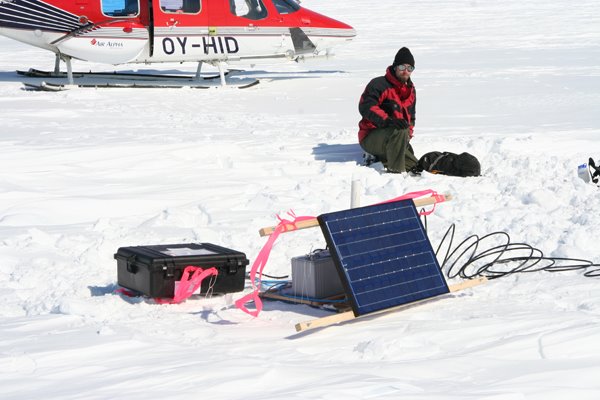
The first week in camp was hectic. We were busy establishing camp, further testing our equipment, and deploying the instruments. During the next few weeks there was a lot of down time, except during the few remaining days that we spent relocating GPS stations. All that was left to do was to download the weather station and ablation meter data, check on the cameras, download data from two GPS that were radio-linked to camp, and survey the mirrors every three hours (regardless of time or weather).

The two radio-linked GPS stations malfunctioned after 4 days (bummer) and a major calving event sent two of our mirrors to the bottom of the fjord (bummer). One of the surveying mirrors was now located on an iceberg and could be viewed from camp – by surveying its vertical position and estimating melt rates and tidal range from our tide gauge, we hope to be able to estimate the amount of melting that occurs below the water surface. I started surveying it once every hour, except during my sleeping hours. Others surveyed it while I was sleeping, so we ended up with a pretty nice record. (The astute reader might note that nowadays surveyors tend to use automatic instruments that do everything for you – we couldn’t afford to buy anything newer so we are still using surveying equipment from the 70s. That’s okay though, because the old surveying instruments are beautiful tools and fun to use.)

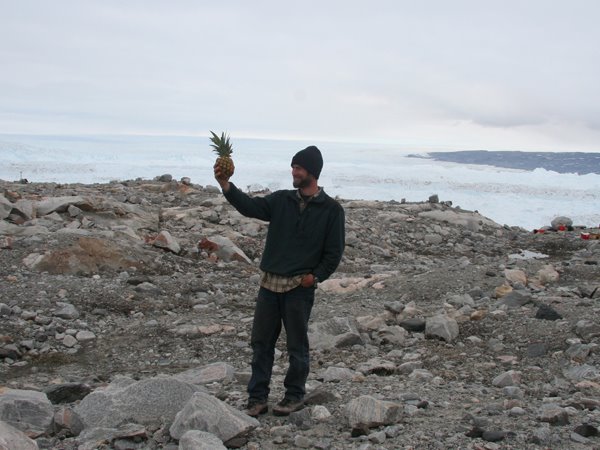
We brought most of our food with us when we first set up camp, but were occasionally resupplied with very good bread and cheese (Danish colonization isn’t an entirely bad thing…) and even a pineapple. The pineapple was a wonderful surprise. It made up for the fact that Roman accidentally brought several kilograms of muktuk (whale blubber) from Ilulissat, thinking that it was some sort of white fish. Muktuk tastes kind of like greasy leather. Actually I thought it was okay in small quantities, but not as a full dinner.


The lack of things to do, the repetitive nature of surveying the markers and the sun travelling in circles through the sky gave a sense of timelessness. Soon my schedule was nearly flipped upside down.

I had a lot of time to think – sometimes too much. Thinking was something that I hadn’t been able to do much of lately. And I mean really think. What am I doing with my life? Onko suomea vaikea kieli, vai olenko vain laiska? (Is Finnish really a difficult language, or am I just lazy?) Why is this glacier so messed up?


We also passed the time taking hikes, reading books, processing data, playing cribbage, watching the icebergs move past, and seeing how many mosquitoes we could swat with one swing. Martin set the record: 21 killed with just one slap on his arm.

Greenland: Scientific agenda

As I described in a previous entry, Sermeq Kujalleq is currently experiencing a rapid retreat and acceleration, as are pretty much all glaciers in southern Greenland. The retreat rates are truly exceptional. 10 years ago no glaciologist would have thought that this sort of behavior was possible on a large ice sheet. The purpose of our study is to attempt to understand not only what is driving this retreat, but also to try to predict to what degree this will affect the entire Greenland Ice Sheet. To this end we will use satellite and field data, as well as numerical modeling. There are four principal investigators on the project and myself, and each brings a distinct slant to the project. Martin is the GPS/flow dynamics expert, Roman brings knowledge of tidewater glaciers and fjord systems, Mark is the remote sensing expert, and Tinu is the modeler. Its still not clear where I will fit in, but it seems that I will most likely be doing a substantial amount of modeling.

Sermeq Kujalleq is very large and difficult to travel across; we are therefore relying entirely on helicopter support. We have deployed 4 “continuous” GPS sites along the main channel of the glacier. These sites will hopefully run for 2+ years and give us information regarding the seasonality of the flow field. We have also deployed 7 “temporary” GPS sites on the nearby ice sheet to see how much the ice sheet is affected by the acceleration and retreat of the main channel. These sites were only occupied for 1-2 weeks and then moved to a new location. They will be redeployed next year to see what changes, if any, have occurred.


Since we feel that the glacier’s stability is largely influenced by what’s happening in the ocean, we also have some interest in studying the processes at/near the terminus. So on our fourth day of flying we had the pilot remove one of the doors so that we could drop surveying mirrors onto seracs (ice towers) – these mirrors could be surveyed from camp. (Don’t worry Mom, it wasn’t me hanging on to the outside of a hovering helicopter – I was at camp making sure that we could see the mirrors.) That same day we put out two additional GPS; one was low on the glacier, the other was on top of a large overturned iceberg. I think I can say that that was the first time that I had stood on ice that used to be at the base of a glacier. Pretty cool.

Finally, we set-up a weather station (temperature and precipitation), an ablation meter (measures melt rates), two time-lapse cameras, and a tide gauge.

23 June 2006

Greenland: Camp site

We flew about 50 km due east of Ilulissat and set up camp on a bedrock ridge close to the ice stream. From there we had great views of the glacier terminus and icefjord. Its difficult to describe the immensity of the place. Its even more difficult to capture it with a photo.


At first glance the site looked like a completely desolate place – just rock and ice – but summer had not yet arrived. Soon the remaining snow patches melted, the ponds dried up, and the flowers started to bloom in succession. I wish I knew the names: first purple flowers, then white, then yellow. Birds began passing through with increasing numbers: ravens, geese, ptarmigan, buntings, and an owl. We didn’t see any signs of larger life, but that’s fine by me – no polar bears came crashing through our campsite. Actually we had been told beforehand that bears don’t come through this area, but you never know…


The glacier was overwhelming at times. The ice flux through the terminus is about 50 km3 of ice per year – I think that’s something like 50 times the amount of water that Los Angeles uses in a year. The sounds of crevasses opening and closing, ice calving off the terminus, and icebergs grinding against each other reminded me of thunder (and growling bears). On a couple of occasions we documented enormous calving events with time-lapse photography. I hope to post a video of those events in the future. The terminal cliff may be the largest ice cliff in the world – it rises over 100 m above the water surface.
Greenland: Ilulissat (meaning: icebergs)

Ilulissat may be the most spectacular place that I’ve ever been. It is a traditional village and is populated primarily by Greenlanders, though you do see quite a few Danes running around as well. The houses are colorful and typical of what you might expect to see in Scandinavia. The town sits on the outer coast and just north of the Kangia Icefjord, which is fed by Sermeq Kujalleq (Southern Glacier). Its called an icefjord (instead of just a fjord) because of the steady stream of large icebergs that travel out to the ocean. The fjord is so packed with ice that you often can’t see any water. On a side note, most fjords in west Greenland have a "Northern Glacier" and a "Southern Glacier", so the name Sermeq Kujalleq is not particularly useful to those of us with western minds.


From Ilulissat you can watch fishing boats weave through the icebergs at all times of day. With 5000 people and 5000 sled dogs its actually a pretty busy place. It has several grocery stores, restaurants, bars, hotels, and a hostel. The local orienteering club meets on Mondays and the kayaking club meets on Tuesdays. I’m not sure what else is happening, but there seems to be plenty to do. Plenty for the tourists as well, and it seems that its only a matter of time until Ilulissat is “discovered”, which I think is unfortunate. Its nice to know that there are still amazing places in the world that don’t have jewelry stores and t-shirt shops on every street corner. But at least I can say that I was there before it became a major tourist destination.


We spent one day in Ilulissat going through all of our gear that was shipped ahead of time and double checking that we had everything. We also tried to trim down our gear as much as possible so as to limit the amount of helicopter trips we’d need to get everything to our camping site. It ended up taking three trips to haul 4 people plus about 5000 pounds of food, camp supplies, and scientific equipment. That’s an expensive camping trip, since the helicopter runs at $3000 an hour (we needed two hours to get everything to camp). Thank you NASA.

Greenland: The Journey

I flew from Fairbanks to Albany, NY on May 19 – in a little over 14 hours. We spent about one day in Schenectady, NY running some last minute errands and dreaming of ice. (Speaking of which, a passenger on my flight to NY asked me why I’m doing field work in Greenland instead of the Caribbean. Good question.) On May 21 we took a taxi to the Air National Guard Base at 4:30 a.m. I remember thinking that that would be the last time I’d see the moon shining brightly for some time.

We flew with the Air National Guard to Kangerlussuaq, Greenland. We and about 30 other beakers (scientists) checked in at the base and sat around waiting to board and depart. There were three planes headed for Greenland, two carrying air national guardsmen and guardswomen, and one with scientists. It was an interesting atmosphere – 30 scientists excited to be on their way to Greenland and about as many guardspeople who viewed a trip to Greenland as a prison sentence.


The military jet we flew on had no amenities. We sat on seats made essentially of cargo straps. The plane was loud enough that we had to wear ear plugs the entire flight, which lasted about 6 hours. The “bathrooms” consisted of a toilet and a curtain that you pulled around you. I guess the military isn’t too big on privacy. The few guardsmen on our flight pulled out stretchers and hammocks and slept most of the way.


We arrived in Kangerlussuaq sometime in the afternoon and were met by the friendly folks at VECO, our logistics provider. Kangerlussuaq (long fjord?) isn’t the most exciting place in Greenland. It may be as far from the coast as you can get in Greenland without being on the ice sheet, yet you can’t see the ice. The town was developed as a military air base – its one of the only places in Greenland where you can land large jets – and as you might expect the town lacks character. All of the buildings look like rectangular lego pieces. But we were excited - Greenland! After eating dinner we sat around discussing our field plans – this was the first time that the four of us (myself, my advisor Martin, Roman from Juneau, and Mark from New Hampshire) had a chance to sit down and talk since the AGU meeting in December.

The next day we flew onward to the town of Ilulissat.

Work completed

We've managed to finish our field work a week ahead of schedule and are now trying to change our tickets to fly to Europe sooner than originally planned. This is turning out to be quite difficult, so we may be "stuck" in Greenland for about one more week. In the mean time I'm staying at a hotel of sorts (for scientists working in Greenland) and have unlimited access to the internet. I'll post several descriptions and photos of Greenland over the next few days.

18 May 2006

Actually, one interesting thing...

I guess there was one very exciting thing that has happened in the past week. I received a young researcher travel award that will cover travel and accomodations for a one month stay in Wellington, New Zealand, this coming winter. I've been in contact with a researcher down there and we're working on ideas for possible collaborations. Not sure what will happen yet, but I'm sure it'll involve some field work and interesting discussions. Maybe (and hopefully) it'll lead to something bigger.

I'm off!

A hectic few weeks will come come to a close when I step on the plane for Greenland tonight (via New York). Again, sorry about the lack of updates lately, but there hasn't been time or anything interesting to write about. But I promise there will be plenty of pictures and stories of icebergs, isbræ, and slots when I return in July. Until then... Have a great summer!

05 May 2006

Greenland drama

As I mentioned previously, it's been a lot of work getting ready for field work in Greenland. Almost everything's been taken care of. Most of our gear is already on its way, we've got airline tickets, hotel reservations, maps, and a big grocery list. Except for two small details, we're set! Right... Yeah, except those two small details are actually pretty big deals. Last week we found out that we couldn't get a permit to operate our radio antennas, which we need in order to download GPS data remotely. The radios would help us to locate our GPS receivers after they've travelled for a year (they probably won't be that easy to find amongst all that ice!). And this week we received a permit to work near the glacier - its a World Heritage Site. But the problem is that we aren't allowed to go where we want to go for camping, optical surveying, and photography purposes. The strange thing is that people camped there last year without any troubles. And what makes this ironic is that a glaciologist was instrumental in turning the fjord into a World Heritage Site (because the glacier/fjord system is very unique), and now glaciologists aren't allowed to go there to study it. Well, anyway, the permit was a little vague so there's still hope, though we are leaving in two weeks....

One thing is for certain though - we'll be going to Greenland, just not sure what we'll be doing!

Save the world!

Ban dihydrogen monoxide. Find out more by clicking here.


How gullible are you?


20 April 2006

Onward to Greenland

A month from now I'll be on my way to Jakobshavns Isbrae, a glacier in western Greenland. I'll travel from Fairbanks to Albany, NY, via commercial airlines. From there we'll fly on an Air National Guard plane to Kangerlussuaq, Greenland, and then hop on a smaller plane to Ilullissat. We'll spend a few days in Ilullisaat organizing gear and double-checking everything, and then we'll take a helicopter to our camp site located at the terminus of Jakobshavns (or Sermeq Kujalleq, in Greenlandic). Check it out on Google Earth: our camp site will be located at about 69°07'30"N, 49°43'48"W. The fjord in front of the glacier that is now filled with brash sea ice was occupied by the glacier as recently as 200 years ago. The current terminus position is actually about 5-10 km back from where it appears in the Google Earth image. Sermeq Kujalleq drains 7% of the Greenland ice sheet, is up to 2500 m thick, and flows at a rate of about 15 km/yr at the terminus. Its impressive, so I'm told.

We'll be in the field for about 6 weeks, and then returning to Fairbanks via Copenhagen... We aren't able to fly with the Air National Guard on our return trip so we're forced to take the scenic route. The benefit is that we get to meet with some researchers in Copenhagen - and I'm going to take few days off and explore the city and its surroundings. So if you're going to be in the area... Let's meet!

Something about CO2

From ice core data we have learned definitively that there is a link between CO2 and global air temperature. The following figure shows CO2 concentration and air temperature (from some reference value) as determined from an ice core in Antarctica. Similar patterns have been found in all ice cores.


The C02 concentrations are measured in air bubbles within the ice core. Air temperature is approximated by measuring oxygen isotopes within the ice crystals themselves. Essentially, isotope fractionation occurs when water evaporates from the oceans - since oxygen-18 is heavier than oxygen-16, water molecules containing O-18 require more energy to be turned into water vapor than water molecules containing O-16. Thus the water vapor tends to be "isotopically lighter" than the oceans it has left behind. The water vapor travels poleward (due to temperature/pressure gradients) and encounters colder temperatures. Cold air can't hold as much moisture as warm air so the water vapor condenses and falls as snow or rain. Again, because it is heavier, the O-18 tends to precipitate sooner than the O-16. So it requires rather warm temperatures at all latitudes for O-18 to be found at the poles, and it can therefore be used as a proxy for air temperature.

The large, 100,000-year cycles in air temperature are what are referred to as glacial cycles. There is quite a bit of evidence that suggests that they are controlled by orbital parameters, such as the tilt of the Earth's axis, the ellipiticity of its orbit, and precession (the Earth wobbles like a top over a long time scales). Other factors are also clearly important, such as the distribution of land mass, which is important over much larger timescales (millions of years).

As I mentioned early, there is a strong correlation between atmospheric CO2 concentrations and air temperature, but from the plot above it is very difficult to determine what comes first - a change in CO2 or a change in temperature. (Methane also experiences similar oscillations.) And in fact there are reasons to believe that a rise in temperature can drive CO2 (and methane) concentrations - it can, presumably, force CO2 out of the oceans (and methane out of swamps that were previously frozen). But on the other hand, CO2 is also a "good" greenhouse gas that can trap solar radiation - more on that in a later post.

Two things to note from this figure: (1) the current interglacial period is the longest in the recent geologic past, and (2) CO2 concentrations are currently rising very rapidly and are much higher than any time in the past 400,000 years. I will also discuss this in a later post with respect to what's happened over the last 100 years - since the industrial revolution.

11 April 2006

Field prep

Sorry about the lack of updates lately - it's been a hectic couple of months and I don't think it will get much better anytime soon. Most people would probably take a break after defending their thesis, but not me. I'm busy running in circles trying to get equipment ready for field work. We have to have almost everything sent and on its way through Greenlandic customs (I guess Danish customs, technically) within the next couple of weeks... In retrospect I should've started preparing things sooner, but, well, too late. What this means is that I don't get to enjoy the balmy spring weather as much as I'd like, but I'll get my share of "outdoor time" later in the summer. And anyway, getting field equipment organized is a nice change from sitting in front of my computer, but then again, it is really stressful. There is a lot of time, money, resources, and work going into this field campaign and it'd be a shame to have some major problems just because we forgot to bring along the right size wrench. Plus my Ph.D. will depend largely on how things go over the next few months, so I've got a lot at stake too.

Maybe in my next few posts I'll spend some time discussing my project and field site - I don't have much else on the brain at the moment. Oh, but I did promise to talk more about carbon dioxide and global warming. Hmmm..

23 March 2006

Triple thesis defense week

This has been a busy week in the glaciers lab - three of the four students are defending their theses, including yours truly. I successfully defended mine on Tuesday, and can now move on to bigger things. These days the thesis defense is more of a formality than the exam that it used to be. Basically your committee won't ask you to defend unless they think you're ready to, and they are also the ones who decide whether or not you pass the defense. And, of course, it looks bad on them if they have students who fail their defense - so they want you to pass. Its become such that the thesis defense is really just an opportunity to share your work with friends and colleagues and to celebrate your accomplishments over the past few years. Since I'll be continuing on for a Ph.D., this is just one step down that road, but it still feels good!

My mom came up to see my defense; Inari and I have been busy showing her around. We saw the start of a dogsled race, went cross-country skiing, visited the museum, saw "Good night, and good luck" (a great movie), watched a moose walk past our cabin, played Carcassonne (a great tile-laying game - buy it!), and are going to view the World Ice Art Championships this afternoon, go to a triple-thesis-defense party on Friday, and swim in the hot springs on Saturday. Phew!

16 March 2006

Our skiing adventure

In typical fashion, our spring break trip didn't go quite as planned. This year we tried to do a 3- to 4-day ski tour near Summit Lake on the Richardson Highway. Under good conditions this would be an ideal ski tour - rolling hills above the trees with spectacular views in all directions. It's also an area that can be very wind swept.

This year the wind had formed extremely hard packed snow dunes, turning skiing into an interesting dance. Our friend Sebastién even managed to break his ski (almost into two seperate pieces) by straddling two of these dunes. Luckily we weren't too far from the road when that happened, and he managed to crawl/walk back to his car while we continued on.


It was a beautiful weekend, too beautiful. There were no clouds in the sky, and temperatures quickly dropped after the sun set and didn't stop until they had reached -30C (-22F). Brrr! After one night in a tent at those temperatures and after having difficulties getting our stove to light, we decided the smartest thing to do would be to head back to the car and get home.

09 March 2006

Science vs. Politics

Since I have recently been discussing (but mostly just intending to discuss) evidence for climate change and potential for anthropogenic causes, I thought I'd insert some political commentary into the mix. An editorial in the February 17th issue of Science highlights some very disconcerting news. In the past, scientists have complained that politicians, the media, and the general public don't listen to the results of their research, and in particular that they choose to ignore evidence for anthropogenic climate change. Now that the public is starting to listen, it seems that politicians want to restrict research and interpret the results on their own - and we'd better agree with them. This is a very dangerous path. Should we also let politicians be open heart surgeons, just because? Let the experts be experts. In addition to the above mentioned editorial, there is a fair amount of speculation in the science community that the current administration is encouraging exploration on Mars and the Moon in order to draw money and attention away from satellites that are observing Earth, many of which are documenting rapid climate warming and environmental degradation.

22 February 2006

Mary Shields

Martin and Dana (my advisor and his wife, pictured below with their daughter Sonja) won a bid at the Northern Alaska Environmental Center auction that was, well, a weekend at a remote cabin. They invited Inari and me to join them. All we had to do was ski 12 miles to this cabin located near Fairbanks, and everything else was provided. All of the supplies we needed were taken by dog team.


The owner of the cabin was Mary Shields, a long-time Fairbanks resident and dog musher extraordinaire. And an exceptionally generous person. For example, after being at the cabin for all of five minutes and having just met Mary, I remarked that I'd love to have a place like this to spend my weekends. She immediately responded by saying that I'm welcome anytime, and that the key is always hanging near the door.


She is quite the musher, too. She's raced in the Iditarod and Yukon Quest dog sled races many times - in fact she was the first woman to complete the Iditarod, although I didn't find that out until I got back into Fairbanks. Nowadays she works every day in the summer doing dog sled demonstrations for tourists. In winter she mushes, and each winter culminates with a month long trip somewhere in Alaska. She epitomizes Alaska (especially interior Alaska) as much as anybody I've met, and is a great example of why Fairbanks can be a great place to live.

10 February 2006

Fairbanks Rescue Mission: a moral dilemma?

I mentioned in a previous blog that I would like to volunteer at a homeless shelter in Fairbanks. The only shelter here seems to be the Fairbanks Rescue Mission, a Christian-based organization that provides food, shelter, and clothing for Fairbanks' needy, transient, and homeless people. I don't object to religious organizations helping those in need - in fact I think its one of the most beautiful aspects of all (?) religions. What I don't agree with is when people try to impose their belief system onto others. What feels best for one person may not be the best thing for somebody else. I think all belief systems are fine, so long as they don't justify hurting somebody else or their property. Anyway, the Fairbanks Rescue Mission requires their "tenants" to attend chapel services and study the bible. I'm not sure that I want to support that... It's one thing to say that the food and shelter being provided to you comes from the grace of God - and even offer chapel services -, its another to try to forcefully convert you by taking advantage of your situation.

I'll keep searching though. Maybe there is another organization that I'm more willing to support.

09 February 2006

The poor glaciers

At present, more than 90% of the glaciers on Earth are retreating. Of course, glacier retreat is not as simple as it may seem.

First, a little refresher: glaciers form when snow accumulation rates exceed melting rates over many years. Eventually the snow metamorphoses into ice as a result of increasing pressure in the snowpack. When the ice becomes thick enough, it deforms under its own weight and flows downhill. As the glacier reaches lower elevations, melting begins to exceed accumulation, until it reaches a point (the terminus) where the ice melts faster than it can flow forward. A change in terminus position can be due to a change in (1) air temperature, (2) snowfall, or (3) ice dynamics. Snowfall is related to air temperature, and ice dynamics is related to air temperature, snowfall, ice temperature, crystal size, and basal properties. It's clearly a difficult problem.

Furthermore, two glaciers located close to each other can behave very differently as a result of local variations in climate or dynamical processes. So the fact that over 90% of the glaciers are retreating is actually very alarming - most of the world's advancing glaciers are tidewater glaciers, which are glaciers that end in the sea and can behave independently of climate. I'd rather not get into the reasons for this, but I can point to the right direction if you're curious enough to learn more.

Evidence for glacier retreat is clear everywhere in Alaska; when walking in the mountains you can see recently-deposited moraines (rock piles left by the glaciers) that are now high above the ice surface. There is also plenty of photographic evidence - for example, see this photo at the USGS website.

A significant portion of this retreat can be attributed to natural cycles. Much of the Earth experienced a cooling period from about 1550-1850, dubbed the "Little Ice Age". And so some of this retreat is result of subsequent warming. What might not be attributed to natural causes is the increasing rate of retreat. Between the mid-1950s and mid-1990s, Alaska glaciers contributed about 0.14 mm/yr to sea level rise. Over the last 15 years, that rate has increased to closer to 0.30 mm/yr.

Glaciers in Greenland remained in pretty steady positions until the last 5 years or so. Now, all (?) glaciers south of about 68° N are rapidly retreating and accelerating. For example, Jakobshavns Isbræ, the glacier I will study for my Ph.D., has retreated 15 km in the last few years and ice flow has accelerated from 7 km/yr to ~15 km/yr at the terminus. Here's another common misconception, almost always screwed up the media and the anti-climate warming people - an accelerating glacier does not have to be advancing. The beds of the glaciers in Greenland are well below sea level. When the ice thins, it can become buoyant - this reduces the drag and also results in the rapid calving of large icebergs. (Yes, these are tidewater glaciers that can respond independently of climate, but that fact that so many of them are retreating simultaneously points to a climate-induced retreat. The popular theory at the moment is that the retreat is due to increasing ocean temperatures.)

Opponents of human-induced global warming would ask why didn't these changes happen earlier - we've been using fossil fuels for over 50 years. The answer to that is again related to the complex relationship between ice volume distribution and dynamics. Simply put, large ice masses respond slowly to changes in climate.

06 February 2006

Heat wave

Now that it's finally warmed up (by 70 degrees!) I've finally had the chance to enjoy the ski trails around our cabin. That's one of the best parts about life in Fairbanks: I can literally put my skis on in the driveway and start skiing into a relatively pristine forest. And, from those trails, I can connect to a whole network of dog mushing trails and frozen rivers that would take me to Nome, Barrow, and beyond. Of course I haven't done that, but I could, and it's a nice thought to know that such opportunities still exist in the world.

As Fairbanks comes out of its coldest January in 35 years, maybe its an appropriate time to talk about human-induced global warming. A friend of mine (Joe) was curious to hear what I might have to say about the subject, since I am a scientist-in-training in a related field. I could quite easily ramble on about global warming, but he was hoping for an objective response, which means I should spend some time thinking about what I say. Plus I should warn that, although my research is related to climate change, I don't spend a lot of time thinking about how humans influence climate. I do hear about these things at conferences and seminars -- I just need to review my facts.

I think I'll start by reviewing evidence for global warming and the uncertainities with those observations, and then I'll get into the more controversial stuff (depending on who you talk to). If you have certain topics to be addressed, questions, or problems with what I've said, then post away!

To be continued...

27 January 2006

Winter in Fairbanks

Today I'm thankful for down jackets and mittens. Click here: January 27, 2006

19 January 2006

Koli National Park

Then back to Finland and onto a train that took us to eastern Finland, quite near the border with Mother Russia to visit with some friends. We had many interesting discussions on the fate of wilderness and indigenous peoples. Two of our friends living there are particularly interested in these topics; through a program called "Snowchange", which our friend started, they’ve traveled and lived with indigenous groups in remote areas of the arctic and interviewed elders about their observations of climate change. Essentially, they are trying to increase dialogue between the scientific community and local people living on the land as they have for thousands of years. If you’re interested in learning more, click here.

We made a stop at Koli National Park, the so-called “National Landscape of Finland”. Numerous poets and artists have been inspired by Koli, especially during the nationalist movement of Finland in the 19th century and early 20th century (Finland gained independence from Russia in 1917). Images of Koli have played an important role in forming the identity of the Finnish people, much in the same way as the western frontier has influenced America’s self image. Unfortunately, we were unable to take any good photos when we were there because the weather was overcast.

15 January 2006

Dunkles hefeweizen

After the exciting trip to the top of Pyynikinharju, it was time for some bier und brezelen. Inari, her sister Anu, and myself visited our friend Rolland who lives in Mannheim, Germany. From the tourist’s point of view, Mannheim leaves something to be desired. It was destroyed during WWII and quickly re-built with cheap supplies, so that it lost much of the character it once had. But it is maybe the more realistic Germany (when compared to popular tourist destinations), and that made it quite interesting, especially with a local guide who was excited to show us around and answer my millions of questions about Nazism, WWII, the re-unification of Germany, the German economy, and the philosophy of beer. I’ve come to the realization that I really do enjoy learning history (previously I thought it was boring), but not the history that you learn in textbooks.

Besides being in Mannheim we also spent one day in Worms, an old Jewish center on the River Rhein that has the oldest Jewish cemetery in Europe, and two days in Heidelberg, a popular tourist spot that was not bombed during WWII because some important American was fond of the city. I’m pretty sure I was there 10 years ago with my family, but I didn’t realize that until Rolland bought a bratwurst from what I think is the same vender that I bought one from 10 years ago (I didn’t remember the person, just the place). Heidelberg has many things to keep a visitor busy, including castle and monastery ruins, a lovely old town, the philosopher’s walk, a fairy tale park, and a Nazi theater. Our guide book said that the fairy tale park is a delight for kids, in which case I’m still a kid!

09 January 2006

The highest moraine ridge in the world

Inari’s sister lives near Pyynikinharju, which is a 200 km long moraine that was deposited by the retreating Fenno-Scandian ice sheet during the last ice age; at approximately 100 m high it is (supposedly) the highest moraine ridge in the world. A moraine is a pile of poorly sorted, angular rocks deposited by a glacier along its margin or at its terminus; they usually form when rocks that fall onto the glacier are transported downglacier and are left near the terminus as the ice melts and becomes stagnant, though in some cases moraines form when a glacier pushes sediments like a bulldozer.

I was unable to confirm whether Pyynikinharju is the highest moraine ridge in the world for a few reasons:

  1. Nobody really cares.
  2. There seems to be some confusion in the geologic nomenclature. The Finnish word “harju” means ridge, but is often translated as esker, which it certainly is not, though both eskers and moraines are ridges. An esker is a long, sinuous ridge of sand and till deposited in a subglacial water channel. Also, the Finnish use the word “moreeni” to mean till, which is just a relatively thin layer of subglacial sediment – till is abundant in the northern plains of North America.
  3. I don’t understand enough Finnish to read through all the Finnish web pages discussing Pyynikinharju.

At any rate, it’s a beautiful place with great views of the city of Tampere and the two large lakes that surround it. So far it’s my favorite city in Finland.

06 January 2006

The Cave

My Grandma and I started an electronic book club about a year ago, that is, if a "club" can consist of just two people. Anyway, it's not particularly exclusive and anybody, even if you're a nobody or just somebody, can "join". The rule of the club is that any books we read must have been written by somebody who won the Nobel Prize for Literature, but the book need not be the author's most famous or even written prior to receiving the prize. Other than that, anything goes. We've made it through the following books so far:

1. Quo Vadis by Henryk Sientkiewicz
2. A Personal Matter by Oe Kenzaburo
3. Beloved by Toni Morrison
4. For Whom the Bell Tolls by Ernest Hemingway
5. Midaq Alley by Naguib Mahfouz
6. The Cave by José Saramago

Each book has been special for its own reasons, but some have been more special than others. We've already visited ancient Rome, modern Japan, slavery, the Spanish Civil War, Cairo, and the "Center". Sometimes we've visited topics we would've preferred not to have visited, but maybe we're better off for having done so.

We most recently finished The Cave, a story about an elderly potter, his daughter and son-in-law, and a dog called Found. The story itself isn't so important, its the poetic and insightful writing that makes this book a fun read. Paragraphs often surpassed three or four pages, some sentences were up to a page long and full of commas. Dialogue was not seperated in the usual style, but rather by commas and capital letters. This made it difficult to follow at times, until you realized that it didn't matter who said the words, only that they were said. Saramago is really a poet, but maybe he realized that he would have a better chance of making a living by writing stories. This story is really a poem, disguised by a plot. Read it for the word play, but stay and enjoy the symbolism, for which there is a lot: the circularity of life, self-discovery, individuality, the dangers of mass marketing, Plato's cave, and pottery (believe me, there is a common thread through these things).

So, what's next?

01 January 2006

Finnish New Year

New Year’s Eve is the only time of year that a permit is not required to shoot off fireworks in Finland. Of course, some people get a little bit antsy and start firing them off as much as two or three days before New Year’s Eve. Come December 31, everybody is shooting them off – all night long. The result is spectacular, and a little bit crazy. I suspect it’s a little bit like being in a war zone: step outside your house and you are immediately surrounded by explosions, you never know when or from which direction the next one will come. My favorite “fireworks” were the emergency flares; normally it is illegal to fire these unless there is an emergency, except, of course, on New Year’s Eve. The flares look like bright red jellyfish slowly floating through the sky.

30 December 2005

Tallinn, Estonia

Inari and I took a two-day trip from Helsinki to Tallinn, Estonia. Tallinn is about 3 hours away by ferry, and a crazy ferry ride it is. Estonia has become something of a weekend getaway for Finns for a variety of reasons: it’s cheaper, it’s familiar but foreign, and because you can buy duty-free alcohol on the ferries. This latter point is very important because alcohol is highly taxed in Finland.

Estonia has traditionally been something of a sister country to Finland. The languages and cultures are very similar, and there has been a lot of trading between the countries throughout the years. This was put to halt for about 60 when Estonia was occupied by the Soviet Union, but has resumed in recent years. The relationship has changed though, and the wounds of the communist days have not healed completely. I think the relationship can be compared to a situation in which one sibling is locked up and abused for years, and the other is unable to help (how could Finland free Estonia from the Soviet Union?) and of course feels very bad about the situation. Estonia suffered some very difficult times that it is still unable to openly discuss, so you can imagine that there is some awkwardness between Estonia and Finland. This is not helped by the fact that many Finns traveling to Estonia assume that Estonians living in Tallinn can speak Finnish, which is often true, for they were able to watch Finnish television during the Soviet days, but is probably not the best way to rejuvenate an old relationship. At the moment, Estonians probably feel closer to Latvians and Lithuanians since they had common histories during a very difficult time period.


Tallinn is one of the oldest cities in northern Europe, first mentioned in text in the 1100’s. A wall was built around the city in the early 1300’s or so; much of the wall and old buildings are still standing. Tallinn has been conquered and re-conquered many times, but somehow survived every battle. The Soviets were content to let Tallinn fall to ruins, leaving many of the buildings in a state of disrepair. But Tallinn persevered, and is now having a re-birth that started with the end of communism. I found it to be a very interesting conglomeration of history: some very old buildings that have stood for centuries, some very modern buildings that have been built in the past 15 years, and everywhere scars of communism.

25 December 2005

Joulu suomessa (Christmas in Finland)

I've spent the past week experiencing Christmas the Finnish way, which is to say, eating lots of food and visiting with Inari's family and friends. In that regard, Christmas here is the same as in the States. But there are many differences as well. For one, Finns seem to have many more traditional Christmas foods than Americans. Christmas tort, Christmas salad, Christmas beer, etc. My personal favorite is glögi, a spiced wine served hot with almonds and raisins (in the wine). What a nice drink for a cold, dark winter day! This year I also survived my first encounter with lipeäkala, aka lutefisk. I was a little disappointed to realize that lipeäkala is edible; that's not to say that it tastes good, but it's just not that bad, especially with an appropriate amount of white sauce.

One Finnish tradition that I really appreciate is "pikkujoulu" or literally, "little Christmas". A fuller translation would say that pikkujoulu is a small gathering (or party) held to thank friends for the good times that they've had over the past year. But it's not necessarily just one party; in one given year you might attend many different pikkujoulus and host a few yourself. During pikkujoulu, you, of course, serve traditional Christmas foods (snacks) and drinks, and maybe sing some Christmas songs.

Hyvää joulua ja onnelista uutta vuotta! (Merry Christmas and Happy New Year!)

23 December 2005

Speaking Finnish

My Finnish is not very good - rudimentary at best. But after spending four days with Inari's grandparents, who don't know a word of English, I feel a renewed desired to learn more. I spent more than one morning in the kitchen with them (while Inari was sleeping) trying to explain very simple ideas. I think they occasionally understand me (no, I don't drink coffee; yes, I'd like some cheese), but more often than not we just looked at each other in complete confusion and threw our arms up in the air. "Oh, it's not important. It's ok."

And, though Finns generally speak English quite well, they are obviously more comfortable speaking Finnish, which means that I'm often left out of discussions. Sometimes I can pick out a few words to understand the general context, and if I'm lucky somebody will summarize the conversation in English. But most of the time I just pretend to be a stereotypical Finnish male: quiet. Not that I expect them to speak English, I'm just happy that they can speak English.

18 December 2005

Onward to Finland

My stop in Minneapolis lasted longer than I intended; thanks to bad weather in Chicago my flights were delayed and I left a day later. The trip to Finland was miserable for various reasons, but I finally made it late Saturday night and am now suffering from jet lag, as usual.

I'm looking forward to having some down time. Even though my time in Minneapolis was vacation, I was quite busy meeting up with people and travelling around. The nice thing about vacationing in Finland is that I feel at home, but I don't have to worry much about work or meeting up with people. Basically I just go wherever Inari goes, but only if I feel like it.

It's interesting how one's perception of a place changes with time. Each time I've come to Finland I've come with a better grasp of the Finnish language, which isn't saying much, but more importantly, I'm less ashamed of saying something stupid. Also, certain things become familiar and "normal", but that's not to say they make sense. For example, why are the light switches for the bathrooms on the outside of the rooms? Is it so that kids can turn the lights off on their siblings while they're sitting on the toilet? Why don't strangers who pass on an empty street say "hello"? And if they do, why are they considered drunk, crazy, or American? Why do Finns always wait for a walk signal when crossing an intersection, even if there aren't any cars for miles? Maybe someday I'll have the answer's to these deep questions of life.

11 December 2005

First publication

The manuscript that I eluded to in earlier posts has finally been accepted for publication in the Journal of Geophysical Research - Earth Surface. Since many people have asked me how the publication process works, I thought I'd try to explain it - but in a broader context (how does science "work"?).

First, you have to figure out what questions to ask about your particular field; this is fairly natural and usually stems directly from your previous work. Then you have to figure out a creative way to investigate those questions, and of course, find a funding agency willing to support your work. For glaciology, the funding sources are typically the National Science Foundation or NASA, but there are other options. You must then write a proposal (usually with other investigators) and submit it to the funding agency. The proposal goes through a review panel consisting of scientists in the same field and in related fields. They ultimately choose which projects will be funded.

If your project is funded, you usually receive two to three years of support; the amount of money you receive depends on the nature of the project. After you conduct your research, you are expected to publish it in a peer-reviewed journal. This is crucial if you hope to continue in academics, make tenure, or continue receiving funding.

The peer-review process is science's attempt at objectivity, and usually it works well. But as I have learned from my own experience and from others' stories, there is a certain amount of politics and personal agendas that are difficult to avoid. Even though we as scientists are taught to separate our opinions from our work, it is sometimes difficult to hear somebody else tell you that what you've worked on for the past 5 years is a bunch of crap. So naturally, some (but definitely not all) scientists develop egos and hold grudges.

At any rate, after conducting your research, you typically write a 12-15 page paper and submit it to an appropriate journal. A scientific editor with the journal (usually a researcher in the field) reads the paper and forwards it to two or three other people for review. The reviewers are not affiliated with the journal, and are typically faculty members or senior graduate students. They read the paper critically and raise a number of questions regarding the work. The editor then has the choice to (1) accept the paper as is, (2) accept it with minor revisions, (3) accept it with major revisions, or (4) reject it. Choice 2 usually involves minor wording changes that will be only be re-reviewed by the editor. Choice 3 may require substantial re-writing or re-analysis, and resubmittal usually results in the paper being sent back to the same reviewers. This can go through a couple of iterations until the paper is finally accepted. Rejection does not necessarily mean that the manuscript is "dead", but probably requires serious thinking about the work that you've done. If you choose to keep working on the paper, you may need to try submitting to a different journal, depending on the terms and reasons for rejection.

When your work is finally accepted for publication, you transfer copyright privileges to the journal, along with about $100 per page and up to $1000 for figures if they are in color (this money comes from grants, if there is no money the journal may waive the fee). The journal publishes the work, sends you "pre-prints" (which are essentially nice copies of your manuscript), and sells the journal to libraries and individuals. And then you wait to become famous. If you're particularly successful, you will receive phone calls from science reporters who will misinterpret your statements and write about your "results" in the newspaper. Then, of course, politicians take the newspaper articles and twist them to satisfy their own agenda, such that in the end you have little faith that the general public really understands the current state of science.

This is my third year of graduate school and I'm already jaded.

First stop: San Francisco

I survived my first trip to the American Geophysical Union (AGU) annual conference. I think survived is the correct word choice, since I felt a sense of relief when the conference ended (after enduring 5 days of poster sessions, talks, and schmoozing). Over 10,000 geophysicists attend this meeting, making it the largest geophysics meeting in the world, to the best of my knowledge. Although the goal of any scientific conference is to share ideas, this conference in particular is a great chance to meet up with old friends, and actually, I think many people attend for that reason alone. The other reason is to eat a lot of good food... Too much, perhaps.


San Francisco was a little overwhelming for me (especially at first), coming from Fairbanks. There are so many interesting places and people to observe, and the cultural diversity is exceptional. I was most struck by the large homeless population - it left me feeling guilty of my privileges (and as a student I'm not exactly rolling in the dough). In certain areas of town you could find homeless people on every street corner, and many of them seemed to have physical and/or mental disabilities. I feel inspired to become involved with the homeless shelter in Fairbanks - maybe by posting these words on the internet I will feel more compelled to do so.

While there, I met up with some old friends, including Jess, with whom I did a 6-week canoe in the Canadian arctic in summer 1998. He was a great host, picking me up at the airport on Sunday and taking me to the (supposedly) best breakfast in San Francisco, then on to Muir Woods, the coast, and dinner at some tasty Indian restaurant. On Saturday (our shared birthday) we went to the farmer's market, and then over to Berkeley to stroll around.


I also tried to experience a little culture (and wanted to make Inari jealous) so I went to the San Francisco Museum of Modern Art. They had some nice exhibits, including many self-portraits of Chuck Close, some of which are usually displayed at the Walker Art Center in Minneapolis. The building itself was very interesting, and was part of larger art center that included a theater and other attractions.


It's difficult to express all the images and experiences from the week. It was fun, but also exhausting.

02 December 2005

Half way around the world and back again

Sorry about the lack of updates lately - the last couple of weeks have been pretty hectic, between trying to make progress on my thesis (its essentially finished, though I won't defend until March), preparing a poster for the American Geophysical Union conference which is next week, and putting the finishing touches on the paper that is nearly accepted into the Journal of Geophysical Research. And then, of course, there is skiing, hockey, and playing hand drums and steel drums!

Over the next 7 weeks I'll be gone from Fairbanks, but I'll try to keep posting as I go, and hopefully put some more thought into the posts than I have recently (sorry). At the very least I'll put up some photos of my Fairbanks - San Francisco - Minneapolis - Helsinki - Mannheim - Helsinki - Fairbanks trip. I'm looking forward to this much needed break, though I do feel a little guilty taking such a long vacation. Once I'm back I'll start preparing for field work next summer in western Greenland!

21 November 2005

Sleepy season

As a friend put it, "when you live in Alaska (or anywhere in the far north), you finally realize that the Earth is a round object". The extreme change in seasons is wonderful, but the change in daylight is almost painful. It's hard to sleep during summer because it's too light out, it's hard to stay awake during winter because it's too dark. As we move toward the winter solstice I find the time I arrive at work gets later and later. It's just too difficult to get up before the sun rises, which nowadays is close to 10:00 am... Luckily I won't get "fired" for showing up late, as long as the work gets done it doesn't matter when and where I work.

It seems most everybody here suffers from SAD (seasonal affective disorder) to some degree. I wasn't prepared my first year here. I didn't realize how much the light was affecting me until spring came and I felt so good! Every year since then has been a little better, but the darkness isn't necessarily something you can get used to. Some people that have lived here their whole lives have a lot of trouble dealing with the darkness. The key seems to be staying active and getting out to enjoy the precious daylight hours, no matter what the temperature. Without much snow that can be difficult; this winter has gotten off to a slow start, but we finally have enough snow for cross-country skiing. I ski to school most of the winter, which takes about 35-40 mins each way. It's a long trip, but I think I'm happier for it. Besides, where else in the world can you ski to work?

11 November 2005

First gig

Last weekend I played in my first "gig" with the Fairbanks Steel Drum Band. I'm not sure gig is the correct term, since we played at an elementary school for their family night. But on the other hand, you can't be too picky about your gigs in Fairbanks - there just aren't many opportunities. The concert was fun; I only played two songs: "Jammin' " and "Yu safe". The rest of the time I just watched or helped with the limbo stick. Those kids are crazy about limbo! After the show I had to "fight" with two of them to get the limbo stick so we could pack up and head home.

It was a somewhat humbling experience - some of the drummers are really good, and they played much faster than I was expecting. Something to work towards, I suppose. The sound of the steel drum is a little too shrill for my liking, but its fun to play. I'll probably continue playing with the band, but maybe focus more on hand drumming.

04 November 2005

Whale music

Winter has arrived (it was -20F at the cabin this morning), so maybe it's about time to stop thinking about summer and accept the fact that winter is here to stay. But before moving on, here's one last anectdote from summer.

During a field project in August, Inari, myself, and a professor from Juneau traveled around Southeast Alaska by boat to try to quantify rates of post-glacial rebound. (Uplift rates in Glacier Bay National Park are some of the highest in the world.) One day while traveling through Frederick Sound, we came across a pod of humpback whales, who spend winters in Hawai'i and summers in Alaska. The largest populations are found in Frederick Sound.


The whales surprised us at first - we nearly hit a couple of them while going 30 mph. Once we realized how many whales were around we decided to kill the engine and enjoy the moment. We must have been surrounded by 30 whales, each surfacing and "singing". One even jumped completely out of the water. (That's a 45 ton cannonball!) We got the feeling they were enjoying the wonderful weather even more than we were. Every being was happy, except for Tracy the dog, who was perturbed by the incredibly deep vibrations produced by the whales.

28 October 2005

God's country

Okay, so it's not usually sunny in Juneau, but you wouldn't know that from these photos and those from my last entry. In August Inari and I traveled to Juneau for vacation and field work. Southeast was hit with record rainfall the week before we arrived, but by the time we got there a heat wave was passing through. We did a great hike on a trail that literally starts in downtown Juneau and quickly climbs 3000 ft, giving us a different perspective on Juneau and the cruise ships. The hike took us a better part of one day.


On the way up you pass into alpine tundra (treeline is at only 2500' or so, compared to 10000' in Colorado) and then follow a ridge back towards the Juneau icefields.


I find it amazing that such beautiful places are largely unknown to most of the world; this place is more beautiful than some national parks in the lower 48. The trail is within the Tongass National Forest, which means its sort of protected. There are signs, though, forbidding you from contaminating the streams because the city of Juneau depends on them for fresh water.

21 October 2005

Sunny Southeast

One thing to keep in mind about Alaska is that view of the world is a little different from here. For example, when people travel to Southeast they are not heading to Disney World. Similarly, what I used to call "out east" is now lumped into the expression "back east" since almost everybody in Alaska is from back east.

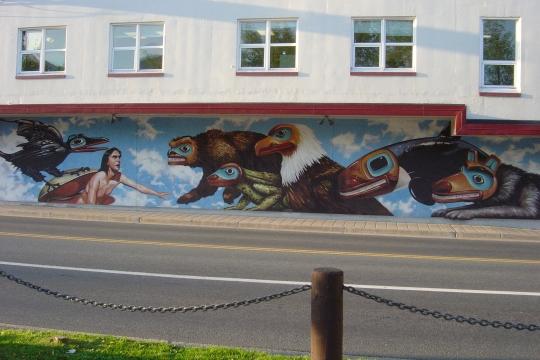
Juneau is, in many ways, the cultural center of Alaska. Some refer to it as North Seattle because it is the most politically liberal part of the state, which means its pretty moderate. There is never a shortage of things to do in Juneau; besides the obvious outdoor activities there is a great bluegrass music scene, numerous good restaurants, some cinemas that show independent films, numerous art galleries and museums, and even an opera. Numerous sculptures, totem poles, and paintings can be found in the downtown area, which is the old part of the city.


And if you still run out of things to do you can always sit and watch the turistos who swarm the city by the thousands each day during the summer. Fortunately for the locals, the tourists usually don't venture too far from the cruise ships so they're impact on the city life isn't too great. Unfortunately, the money they spend on Persian rugs and Brazilian emeralds doesn't go to the locals.

14 October 2005

Fish "harvesting"

Life at the moment isn't super exciting; I'm working my tail off on my thesis so that I don't feel as guilty about taking so much time off over winter break. Plus, we've entered the "shoulder" season: it's much too cold for summer activities, but there isn't enough snow yet for skiing. I've decided that for the next few weeks I'll start posting some photos and stories from the summer. I'm not sure if I'll keep updating the ol' website or not. This seems much easier.

--------------------

Being an Alaskan gives you certain privileges, such as an annual dividend from the government and the ability to go "dipnetting" in the famous Copper River near Chitina (pronounced Chit-na). Dipnetting is so many things rolled into one. But at its core it's basically the "Great Alaskan Get-Together". Alaskans of all sorts drive to the tiny town of Chitina, which is a couple hours from Valdez, which means the middle of nowhere, to stick their nets in the glacially-fed Copper River. And then you wait for salmon to jump in your net.


To get from Chitina to the fishing holes, you have to drive down an extremely rough, one lane dirt road that is on the edge of a cliff. Eventually you come to a spot where the road has been "closed" due to high slope instability. Many people drive right past that spot, others use four-wheelers, or dirt bikes. We had intended to bicycle, but upon arriving at the closed road sign, we were informed that the fishing were running so hard that we wouldn't have to go to the better fishing holes down the road. So, at 12:30 am we scrambled down the steep slope (45 degrees?) to the water's edge, tied our nets to a tree so that we wouldn't have to continually fight the current, and watched the fish come. It was almost like they wanted to be eaten.


Each household is allowed to catch 30 fish per year - if the salmon are running hard you can get your limit in a few hours. By 5:00 am we had caught 64 salmon (for three of us), all of them about the size as those in the picture above. Anybody that's done any fishing knows the work has just begun. We then hauled the fish up the steep slope, drove a short ways to a clear stream and cleaned the fish. After putting them on ice, we started heading home. We rolled into Fairbanks sometime in the early evening, and crashed.


The next two days were spent filleting the fish, and then freezing or smoking them. We figured that we had spent something like $0.60 per pound of salmon. At a store, that same salmon would cost closer to $10.00 per pound. It was a lot of work, but well worth the effort.

07 October 2005

Travel woes

The big downside to living in Fairbanks is that its so far from everywhere - except wilderness. Its really an isolated community. Anchorage is 6-7 hours away by car, and there is basically nothing in between. Just getting to the state capital (Juneau) is quite an adventure. If you want to get there you have two options: taking a 2+ hour flight (if you're lucky you can get a direct flight) or driving through Canada and catching the ferry from Haines. That takes about 15 hours, about the same as driving from Minneapolis to western Montana. And if you want to visit the U.S....

Of course, the airlines aren't exactly trying to make travelling any more enjoyable. I don't have a lot of sympathy for the airline companies' current plight. About a month ago I purchased tickets to fly from Fairbanks to Minneapolis to Helsinki to Fairbanks over winter break. I recently decided to attend a geophysics conference in San Francisco that ends the day before I was scheduled to leave Fairbanks. Changing the ticket sounded like a hassle, so I asked if I could just cancel one leg of the ticket (2 months in advance). Turns out you can't do that without canceling the entire ticket and losing all that money. Somehow that doesn't make sense: I told them that I would just forfeit my seat, and that they could give it to somebody else (and charge them for it), but the airline wouldn't do it. My only option was to change the ticket - at first "they" tried to charge me $800 to do that, since the cost of the flight went up. The same flights, one month later, cost $800 more. Can you imagine if buses operated like that? Anyway, enough ranting. We got it squared away (minus lunch money for a couple months).

I'll be in Minnesota December 11-15 (arriving early on the 11th, leaving midday on the 15th). Leave your calendars open, it's gonna be wild.