


8 years ago
26 March 2007
inari.com
Inari the artist will be graduating in a few weeks and then joining the "real world". She'll likely be doing some freelance art and graphic design, which you'll be able to view at her new website: http://www.inarikylanen.com. There's not much there yet, but I'm sure more will be coming.
Going solo (skiing)
I just completed my first solo winter ski expedition, which turned out to be a somewhat crazy adventure. In a way it was one of the most remote trips that I've done, but it was also one of the cheapest and closest to home.
Last Wednesday I flew by small aircraft to Manley Hot Springs, an end-of-the-road village that is about 80 miles west of Fairbanks as the crow flies. From there my goal was to ski back to my cabin in Fairbanks. After arriving in Manley I put on my skis and threw my 60 lb (27 kg) pack on my back and started shuffling down the street. That first day I navigated my way through a maze of snowmachine trails partly by luck and partly by instinct. These trails are definitely for people that live there and know the land well. The first day was almost without incident, except that near the end of the day I missed a turn that I was supposed to make and ended up at an old sourdough's cabin. He invited me for a cup of coffee (I declined), told me a little bit about the trail that I was supposed to be on (the trail used during the Serum Run, a fascinating story for those of you that don't know it), and pointed me in the right direction. I felt pretty good about my first day - I had covered over 25 miles (40 km) and was well on my way home.
That night it snowed, just a little, but it was the bad kind of snow: granular, coarse snow that grips your skis and makes you wonder why have these heavy things strapped to your feet. The trip became a death march. My hamstrings quickly tightened up, which was followed by sore feet and a swollen achilles (tendonitis, I believe). I passed through the Dugan Hills and Deadman Lake - didn't stay there too long! Then onward pass the settlement at Tolovana and into the aptly named Minto Flats. Day two had me second guessing my ability to make it home. Would I have to turn around? Should I take a trail to a different village and hitchhike home?
Friday morning wasn't much better, slow and frustrating. The trails got better as I approached Old Minto, a former native village and now a drug and alcohol abuse center. I began to regain my confidence. Its amazing how many mood swings I went through on that trip. I thought I could make it all the way to Fairbanks, it might hurt a little, but that's okay. And at that moment the buckle on my hip strap snapped, meaning that all of those 60 lbs of gear and food would be resting on my shoulders for the last 50 miles. Ouch. I still could have turned towards Nenana (rhymes with banana) and shortened my trip, but I decided to continue on.
Friday night it snowed. Again, more bad snow. I wound my way through a labyrinth of rivers, ponds, and swamps and finally hit the Alaska Railroad. That was a comforting thought, now I was in a safe area and starting to get close to Fairbanks. The trails should also improve, or so I thought. The terrain became more familiar, I recognized some hills in the distance. But still the skiing was slow. I skied 11 hours on Saturday, but still covered less ground than I had covered in 8 hours on Wednesday. Furthermore, that night I discovered that part of the pain in my right foot was due to a huge blister that now makes walking quite difficult. I'm pretty sure the blister was a result of skiing with frozen boots in the morning. They had thawed out by afternoon and became more flexible.
I hadn't given up hope of making it home, but I began to seriously consider alternative routes. I had plenty of food - way too much in fact - so time wasn't too much of an issue. Weather ended up being the determining factor. That evening it dropped below -20 F (-30 C) and I could hardly sleep. I woke up several times shivering and was eventually unable to fall back asleep. I decided that there was no point in lying in my sleeping bag shivering, so I got up at 3:30 and took the shortest possible route to the highway. I would hitchhike home after all. The night sky was clear, the moon was bright, and I was treated to a spectacular auroral display that lasted for at least 2 hours. I enjoyed it thoroughly, and took it as a sign that I had made it.
I had no trouble getting a ride home. Its pretty easy when its cold and you look beat up. I made it home in time to go out for a big breakfast at Sourdough Sam's, a rewarding finish to a tough trip.
So, why did I do this trip? I'm not sure. But I'm sure it won't be my last ski trip. Going solo was a very different experience, I felt more aware, but also more insignificant. I had no support, mentally or otherwise. I tested my limits and came away with nothing more than some wounds that will heal in a few days. I learned something about the land where I live, where people have lived (amazingly) for thousands of years. I gained more respect for pioneers, building trails and living on the land. And I learned that as I much as I love wilderness, I still need some modern comforts. I ultimately didn't achieve my goal, but I did put myself into a position that I could have achieved it if it was really that important to me. And I didn't lose any toes.
23 February 2007
Mary Shield's Cabin, Part II
Two weekends ago I found myself skiing out to Mary Shields’ cabin with Martin and Dana and their 2 year old daughter Sonja, and Keith (another glaciology professor). This was the second time that I’ve made the trip (see February 2006). It was a lot of fun and mostly uneventful, except for one near disaster… On the way into the cabin on Saturday we encountered a long stretch of overflow that had not yet frozen. (Overflow occurs when a creek freezes to the bed, but there is still water being fed into the creek. The water pressure gets too high, and it squirts to the surface through cracks in the ice, the result being that there is water everywhere.) We managed to get through the overflow with little difficulty – just wet feet, but that wasn’t a major problem because it was quite warm.
21 February 2007
Yukon Quest
This year's winner of the Yukon Quest dog sled race crossed the finish line in Fairbanks yesterday afternoon. At noon I heard that the lead team (Lance Mackey's team) was expected to be in town shortly, so I drove into town to watch the finish. It turned out that Mackey wouldn't arrive until 2:00 pm, so that gave me a lot of time to stand around in the cold and ask myself "Why am I here?". I was there to people watch, I guess, and to check out the latest Fairbanks fashion.
 Mackey eventually arrived and we were all happy that we could go back to our cars to warm up. The dogs looked happy and eager to continue on, even though they had just run 1000 miles in 10 days, and in doing so broke the old course record by over 12 hours. Mackey is also planning to run in the Iditarod, another 1000 mile long race; it starts in two weeks

 Mackey eventually arrived and we were all happy that we could go back to our cars to warm up. The dogs looked happy and eager to continue on, even though they had just run 1000 miles in 10 days, and in doing so broke the old course record by over 12 hours. Mackey is also planning to run in the Iditarod, another 1000 mile long race; it starts in two weeks

19 February 2007
Rainbow Peak
I’ve been quite bad updating the blog lately but I have a pretty good excuse: I’ve been too busy having fun. We’ve had exceptional weather over the past month and there has been no shortage of opportunities to enjoy it. The past weekend was quite cold, so I finally had the chance to cross off some things from my to-do list.

Rainbow Peak , one of the easiest and most accessible climbs in interior Alaska Fairbanks Mt. Wrangell (a massive volcano), Mt. Drum , and Mt. Sanford (a 5,000 m peak), all approximately 150-200 km to the south. We were back down to the car at 4:30, just as the sun was beginning to set. I found myself in bed at 10:00 pm and didn’t find myself getting out of bed until noon the next day.


19 January 2007
Tolovana Hot Springs

The weekend after New Year's we headed out on another cabin trip, but this one involved a sauna and colder temperatures. Most people left on Friday and came back on Sunday. I wasn't feeling too good on Thursday, so I decided not to go. (Admittedly, I wasn't all that excited about skiing 11 miles at -20 to -30 F (-30 to -35 C).) I felt better all day Friday, and I wasn't too happy about people having fun without me, so I packed up my things and got ready to head out on Saturday. I got an early start, started skiing at 10:00 am (before the sunrise) and made it into the cabin by 1:00 pm, just as they were finishing breakfast/brunch/lunch - it was a lazy morning for them.
The "group" consisted of 1 snowmobiler ("snowmachiner" in the Alaskan dialect), 4 skiiers (1 on tele-skis, 1 on randonee, and 2 on cross-country), 4 snowshoers, and 4 walkers/sledders, and 2 dogs. I'm usually not too keen on having snowmobiles around, but in this case it was a good thing. It was nice to have the security of knowing that if somebody got dangerously cold skiing/snowshoeing/hiking, that we could get them to the cabin quite quickly. We also got to bring with some things that you wouldn't bring without a snowmobile, like milk, juice, and a keg of beer.
Saturday afternoon was spent chatting and eating, in the evening we went for a dip in the hot springs. All 13 of us.
We got up relatively early Sunday morning and headed back to the trailhead - staggering everybody's start time so that we would all finish the journey at about the same time. We arrived in the early afternoon and started up the cars - or tried to. Three of them started no problem, one needed to be jumped and heated up with camping stove, and the fifth car just wouldn't start. We left it there and returned the next day with a generator and heater and a new battery - that did the trick.

Self-portrait after skiing 11 miles in frigid temperatures.

Inari after snowshoeing 11 miles.
It turned out that Saturday was the nicest day of the weekend, and so I felt glad that I chose to wait until then to ski in. The light was beautiful and there was no wind, a rare thing on that trail. It took me three hours to ski to the cabin, but it probably would've been quicker if I hadn't stopped to take so many photos.

Dr. Seuss's inspiration?

Spectacular light on Saturday morning.
New Year's Eve
Inari and I greeted the new year with three friends, seven dogs, some spiced wine, and firecrackers at a cabin in the Chena Recreation Area about 40 miles from town. It was my first time skiing this winter due to my trip to New Zealand and a general lack of snow in Alaska. It must've been a good time because for once I wasn't preoccupied with the thought that yet another year was slipping by. The dogs were also a lot of fun, running laps around the cabin, jumping, playing. Made me want to get one of my own. Maybe someday, when we have a better idea of where we'll be living in the longterm. I'd hate to get a husky and then end up living in a city. I don't think I could part with the dog, but it also wouldn't be fair to the dog.

Here's the New Year's group, from left to right: myself, Siren, Inari, Mica, Sandy, Safira, Tico, Anja, Bailey, Eamon, Elvis, and Scout.

The mulled wine, a German tradition. You pour wine into a pot, put a sugar cone over the top, pour rum over it, light it on fire, and add more rum.

Here's the New Year's group, from left to right: myself, Siren, Inari, Mica, Sandy, Safira, Tico, Anja, Bailey, Eamon, Elvis, and Scout.

The mulled wine, a German tradition. You pour wine into a pot, put a sugar cone over the top, pour rum over it, light it on fire, and add more rum.
16 January 2007
Brian and Lynley
One last New Zealand post, then I'll almost be caught up...
One of the researchers that I worked with is an interesting character and deserves a post of his own. Brian has a Ph.D. in glaciology and now works half-time doing glaciology research. The other half of his time he spends being a good citizen: protesting, writing letters to the newspaper, and taking mining companies to court. At the moment he is working on a campaign to prevent a mining company from working in an area (the only area) where an endangered species of snail lives. The mining company wants to simply relocate the snails, but then, why do the snails only live in this one area? Maybe the snails wouldn't be too happy about being relocated.
Brian and his partner Lynley were living in a bus for several years (they're now working on a building a house), the bath is outside and is heated by fire, and their outhouse consists of a hole in the ground - no roof or seat! Brian built a small hydropower system out of an old washing machine and protected from the elements by covering it with a real estate sign. He also built a wind turbine, but that fell down during the first storm. The car runs on veggie oil, which he picks up from various hotels and restaurants in town. I got to go with him to pick up a load (1000 L) of veggie oil. See photo below - containers of veggie oil pictured with the bus.

Here's a view of the shed where Brian processes the veggie oil before using it in his car. He's still trying to figure out to do with the all of the crud that he's filtered out. He said that he's leaning towards building a flame thrower (why?!?) but that he might also give it to the fat man who ships it to China to be made into lipstick...

It was a little bit funny being in the field with him and Tom (master's student). Tom works at a gear shop and has very fancy clothing and equipment; Brian uses gear that might be older than I am.
New Zealand plant life
Besides birds, the next most interesting thing in New Zealand is the native vegetation. As with the birds, much of the vegetation is extinct or nearly extinct, thanks to introduced plant and animal species. It seems that immigrants were more interested in building a "better Britain" than in adapting to a new, unique ecosystem. Here are some of the unique plants that I stumbled across.

The aptly named "vegetable sheep".

Poroporo, a plant traditionally used by the Maori for medicinal purposes. The berries are poisonous until they become ripe. (In Finnish, poroporo would mean "reindeer reindeer".)

New Zealand Edelweiss - just a little bit different than the real thing.

The flower of kotukutuka (tree fuchsia), one of the only native deciduous trees in New Zealand.

New Zealand flax...

and a flax flower, which grows on a stem that is much longer than the rest of the leaves.
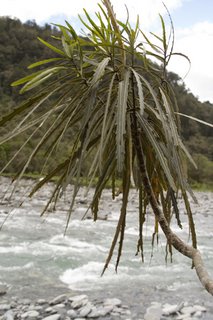
Lancewood (I'm having trouble finding the Maori name), a plant that looks different during its juvenile stage than during its adult stage. During the juvenile stage, the sharp leaves point upwards; as the tree gets taller the leaves start to point downward and become fleshier. It is thought that this was to discourage browsing by moa. When the plant is short, its leaves are to sharp for a bird to eat, and when the plant becomes taller to it is too high off the ground for the moa to reach.

Very few native plants in New Zealand are edible; this is one of them. The leaves are very spicy and would probably be nice on a salad or soup, but apparently nobody uses them.
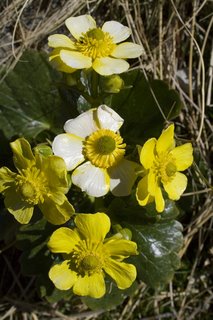
The Mt. Cook Lily, high alpine flower found on the south island..

The aptly named "vegetable sheep".

Poroporo, a plant traditionally used by the Maori for medicinal purposes. The berries are poisonous until they become ripe. (In Finnish, poroporo would mean "reindeer reindeer".)

New Zealand Edelweiss - just a little bit different than the real thing.

The flower of kotukutuka (tree fuchsia), one of the only native deciduous trees in New Zealand.

New Zealand flax...

and a flax flower, which grows on a stem that is much longer than the rest of the leaves.

Lancewood (I'm having trouble finding the Maori name), a plant that looks different during its juvenile stage than during its adult stage. During the juvenile stage, the sharp leaves point upwards; as the tree gets taller the leaves start to point downward and become fleshier. It is thought that this was to discourage browsing by moa. When the plant is short, its leaves are to sharp for a bird to eat, and when the plant becomes taller to it is too high off the ground for the moa to reach.

Very few native plants in New Zealand are edible; this is one of them. The leaves are very spicy and would probably be nice on a salad or soup, but apparently nobody uses them.

The Mt. Cook Lily, high alpine flower found on the south island..
02 January 2007
The friendly birds
If there is anything worth knowing about New Zealand, its that the bird life is amazing. Prior to the Maori arrival around 1200 A.D., the only mammals living in New Zealand were bats. This allowed the bird life to flourish and evolve into some very unique species. The largest bird was the moa, which could grow to 3 m in heigh and was flightless - it didn't even have stubs for wings. Maybe more extraordinarily was the Haast eagle, the largest eagle to have ever lived. They weighed 10 kg and had a wingspan of 2.6 to 3 m. They survived by preying on moa!
Unfortunately, the Maori and later the Europeans killed off much of the native bird life through hunting, habitat destruction, and the introduction of exotic species. Some interesting birds have managed to survive, such as the endangered kiwi, the kea (a mountain parrot), the weka, and the tui and the bellbird or korimako.
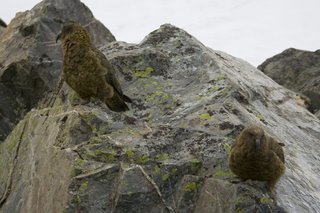

I didn't manage to see any kiwi, but we were visited by two kea at our hut, and I saw several weka begging for food at tourist sites. The kea were really cheeky and fun to watch. The clearly weren't concerned by our presence - they were more concerned about trying to rip the roof off the hut.
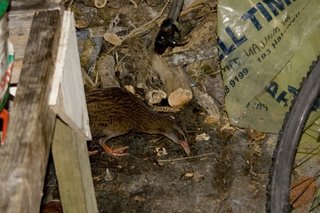
This weka I spotted searching for food in a little shed.
I also saw and heard several tui and bellbirds, but they are quite small and difficult to photograph. They are songbirds in the truest sense of the word, and hearing them greet the morning sun is a real pleasure. The tui are especially fun because they have two voice boxes and can therefore produce a wide range of sounds (some that humans are unable to register) and have they ability to mimic other sounds, such as bellbirds.
Unfortunately, the Maori and later the Europeans killed off much of the native bird life through hunting, habitat destruction, and the introduction of exotic species. Some interesting birds have managed to survive, such as the endangered kiwi, the kea (a mountain parrot), the weka, and the tui and the bellbird or korimako.


I didn't manage to see any kiwi, but we were visited by two kea at our hut, and I saw several weka begging for food at tourist sites. The kea were really cheeky and fun to watch. The clearly weren't concerned by our presence - they were more concerned about trying to rip the roof off the hut.

This weka I spotted searching for food in a little shed.
I also saw and heard several tui and bellbirds, but they are quite small and difficult to photograph. They are songbirds in the truest sense of the word, and hearing them greet the morning sun is a real pleasure. The tui are especially fun because they have two voice boxes and can therefore produce a wide range of sounds (some that humans are unable to register) and have they ability to mimic other sounds, such as bellbirds.
Tasman Glacier and De la Beche Hut: Home for a Fortnight

Our field site was Tasman Glacier, which is New Zealand's longest glacier with a total length of 25 km. Its upper accumulation area has an elevation of over 3000 m and is thought to receive something like 12 m of precipitation a year. The glacier is within Aoraki/Mt. Cook National Park and is popular tourist destination for climbers, especially those wishing to climb Aoraki, the highest peak in Australasia. I prefer the Maori name "Aoraki" because it was the first name given to peak and it is a beatiful and appropriate name - meaning "cloud piercer". We had a nice view of the summit of Aoraki from our hut and often observed it piercing the clouds.

Only rarely does field work involve staying in a hut, and it was a real treat, especially during periods of rainy, windy weather. The huts in Aoraki/Mt. Cook National Park are all equipped with radios, and this allowed us to get weather reports and to arrange for a helicopter to pick us up when we finished our work.
Here's a view of the inside of the hut.

The field work was greatly complicated by the fact that the Tasman Glacier has thinned significantly over the past 100 years. The hut is now located some 100 m above the glacier, and the only way to access it is to scramble up a steep, unstable moraine. It wasn't quite steep enough to require the use of a rope, but if you picked the wrong route (as I did on two occasions) you would find yourself wishing that you had one. The photo below shows the moraine that we could to scramble up and down everyday, sometimes carrying heavy equipment, food, or our toilet.

Wellington

In total I spent about one week in Wellington, the capital city of New Zealand. In the last few years I've spent a lot of time in the wilderness on hiking trips and during field work, and so trips to cities are becoming more and more novel. I really enjoyed my time in Wellington, probably in part because the weather was really nice while I was there. The city reminds me of San Francisco, though smaller and less diverse. It has a large natural harbor, sits on a major fault and is sure to be decimated by a major earthquake at some point in the not-too-distant future, has a small island where they used to put inmates, has steep windy roads, lots of old wood houses, numerous cafes, and it has a climate similar to San Francisco. Both Wellington and San Francisco were built in a haphazard way - San Francisco by miners, Wellington by a city planner living in England who didn't consider topography in his design.

The view from Tom's apartment.
Wellington has many "secret staircases" that cut up and down the hills that make great shortcuts, as long as you know where you are going. Many houses don't have direct access to the road - some have little trams that you take you from the road to the house, others just have very long staircases. My favorite thing about Wellington was that it was very urban yet also very peaceful. In about 15 minutes you can walk from the city center to a heavily vegetated suburb. The houses sit close to each other, but you hardly notice your neighbors. The area is so lush that I got the impression that if you left town for a couple of months you might need a machete in order to "reclaim" your house.
The last day that I was in Wellington I went to the Karori Wildlife Sanctuary with the hope of spotting a tuatara, a very special reptile that has remained relatively unchanged over the past 200 million years. The tuatara, which is endangered, was once found throughout New Zealand but now only lives on remote islands with few predators. It has recently been brought to Karori Wildlife Sanctuary in an attempt to reintroduce it to the north island. I've been told that they reproduction rates are very low and that they grow slowly, making reintroduction a difficult task. However, they can live to be 100 years old. Check out the description of tuatara on wikipedia - they are really fascinating creatures.
Anyway, I got lucky and I was able to snap a few photos of a tuatara.

29 December 2006
The Trip: A summary
The plan for my visit was that I’d arrive in Wellington (on the north island), spend a few days there organizing gear, squeeze in a trip to Mt. Ruapehu to help set up a weather station, and then head to the south island with Andrew Mackintosh (professor) and Tom Paulin (M.S. student), where we would meet up with Brian Anderson (post-doc). The weather didn’t cooperate and we had to cancel the trip to Ruapehu, which was maybe for the better since we were quite pushed for time anyway. More unfortunately, though, was that Andrew had to change his plans at the last minute and was no longer able to join us in the field.
This now meant that I was going to be the primary driver since Tom doesn’t have a driver’s license. It took some getting used, but I got the hang of driving on the left side of the road after a couple of days. I got good enough at it that after returning to Fairbanks Inari had to yell at me for driving on the wrong side of the road! The only thing that gave me trouble was the craziest driving law that I’ve ever heard of: if you are turning left, you have to yield to somebody who is turning right (across traffic). Strange. So we headed south to Christchurch, “the most British city in New Zealand”, though I really didn’t think it was very British at all. We ran some errands there and met up with Brian. From there we went inland to Mt. Cook Village and our goal – Tasman Glacier.
New Zealand is a windy place. Really windy. It looked for a while like we might have to wait a week or more (because of the wind) before we could fly into our research site. We lucked out and got a flight in after just two days of waiting. And other than a couple of stormy days we had great weather in the field.
Then it was back down to Mt. Cook Village, south and then west to the “west coast”, a visit to Brian’s house (more on that later), past Punakaiki (Punakaikki would me “red everything” in Finnish) up to Nelson Lakes National Park (a bird-lover’s sanctuary and a great place to hear the “dawn chorus”), and then back to Wellington for a few days of relaxation before heading home.
New Zealand: Land of Compromise
My impression of New Zealand was that it is a place for people who can’t make up their mind. New Zealand has beautiful mountains with glaciers, but not as beautiful as the Alps or Alaskan mountains. It also has beautiful beaches and temperate rainforest that reminded me a little bit of Hawai’i, though again, not as beautiful. The cities are okay, but they can’t compare to many European cities. But what makes New Zealand truly unique is its diversity of ecosystems, which are full of unique birds and plants, in such a small country. Within a few hours you can drive from what is essentially a high desert, pass through a high alpine area with glaciers, and arrive at a temperate rainforest with a nice beach. And considering that it is a beautiful place with a nice climate, there are relatively few people living there, especially on the south island.
16 November 2006
In search of sunlight and warmth
I leave tonight for some much needed R&R&R&R (research and recreation and rest and relaxation) in New Zealand. I fly into Wellington, which is located on the southern tip of the north island, where I will meet up with Andrew Mackintosh (professor) and his post-doctoral researcher Brian Anderson and student Tom Paulin.
Shortly after my arrival we'll head north to a glacier on top of Mt. Ruapehu, an active volcano. This will be my first time on an active volcano - in fact it just gave out a little burp about two months ago. Cool! We'll be at Ruapehu for just one or two days; I'm not even sure what sort of work we'll be doing, I'm just going along for the ride and the ski down from the summit.

After that we're going back to Wellington and packing up our gear for a bigger project on the Tasman Glacier - New Zealand's largest glacier. We'll take a ferry across Cook Strait, then drive down the east coast past Christchurch and onward to Aoraki/Mt. Cook National Park. We plan to be on Tasman Glacier for 2-3 weeks, depending on how things go. And how things go depends largely on the weather, which can be very rainy. Thankfully, we'll be staying in a nice, cozy mountain hut.
After the field work is completed I will hopefully still have a week or so to travel around a little and see some other parts of New Zealand. I'll arrive back in Fairbanks on December 20, which means that within one day I'll be going from 15 hrs, 25 min of daylight to 3 hrs, 42 min of daylight. That's going to be rough.
10 November 2006
Where are you really from?
Inari found a fun website that asks you a series of questions regarding how you think words should be pronounced, and at the end it tells you where in the U.S. your accent is from. Apparently she's from north Jersey. And my accent gives away my true origins:
"North Central" is what professional linguists call the Minnesota accent. If you saw "Fargo" you probably didn't think the characters sounded very out of the ordinary. Outsiders probably mistake you for a Canadian a lot.
I must say though that I did think the characters in Fargo sounded "a little" out of the ordinary. Actually, when I was in Minnesota in August I met one of my mom's friends who has a very thick Minnesotan accent, and I could hardly keep from laughing at her!
25 October 2006
Is a geek a nerd?
For those of you that always wondered what a "nerd" is, or where the word comes from, here is the page for you.
24 October 2006
Artistic obligations
This has been a good month for Inari artistically. First, she had two pieces accepted into the "64th Parallel" juried exhibition, which is basically a competition between artists in the interior. One of her pieces received an honorable mention award for being one of the best pieces in the show.
Currently, the MFA (Masters of Fine Arts) students are displaying their work at the university's gallery. Inari has two pieces there, one of which is featured in this weeks edition of the student newspaper. Check it out, but ignore all the typos.
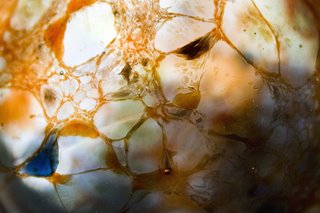
Being married to an artist makes me feel a little inspired to become more artistic. Since I clearly can't paint or draw "fantastical images", I've resorted to photography. Here are a couple of photos that I've taken recently. Can you guess what they are? (The second one is probably easier to figure out than the first.)

Currently, the MFA (Masters of Fine Arts) students are displaying their work at the university's gallery. Inari has two pieces there, one of which is featured in this weeks edition of the student newspaper. Check it out, but ignore all the typos.
Being married to an artist makes me feel a little inspired to become more artistic. Since I clearly can't paint or draw "fantastical images", I've resorted to photography. Here are a couple of photos that I've taken recently. Can you guess what they are? (The second one is probably easier to figure out than the first.)


17 October 2006
Cut off from the world
Yesterday we received a reminder of how isolated we are from the world. There are two fiber optics cables leaving Fairbanks; one heads towards Valdez, the other towards Anchorage. The cable to Valdez was damaged last week when a major storm system (a "chinook") blew into the state and caused major flooding. The second cable was accidentally cut during construction. Whoops! The result is that we had no internet access and no long distance phone service. They managed to repair the cable yesterday evening, but still, it makes you wonder what would happen if there was a major disaster. Apparently our line of communication with the rest of the world is quite fragile, and at the same time there are only a few roads leaving from Fairbanks. One heads south to Anchorage, another to the Yukon Territory or to Valdez, and the third goes straight to the Arctic Ocean.
02 October 2006
Thank you Anna, for making such wonderful cookies
Our local Fred Meyer (grocery store) has recently expanded and diversified its international foods section, which means that we now have a steady supply of Anna's gingerbread cookies.

Though they may not be as tasty as Inari's grandma's gingerbread cookies, finding them at the store was still a cause for celebration. To make sure that I no longer have to import them from the United States, I've decided to single-handedly make it worthwhile for Fred Meyer to keep selling them - since my discovery I've purchased one box of cookies per day! Now I'm just hoping for pickled herring, Finncrisp, marzipan, ...

Though they may not be as tasty as Inari's grandma's gingerbread cookies, finding them at the store was still a cause for celebration. To make sure that I no longer have to import them from the United States, I've decided to single-handedly make it worthwhile for Fred Meyer to keep selling them - since my discovery I've purchased one box of cookies per day! Now I'm just hoping for pickled herring, Finncrisp, marzipan, ...
Subscribe to:
Posts (Atom)


