16 November 2006

In search of sunlight and warmth

I leave tonight for some much needed R&R&R&R (research and recreation and rest and relaxation) in New Zealand. I fly into Wellington, which is located on the southern tip of the north island, where I will meet up with Andrew Mackintosh (professor) and his post-doctoral researcher Brian Anderson and student Tom Paulin.

Shortly after my arrival we'll head north to a glacier on top of Mt. Ruapehu, an active volcano. This will be my first time on an active volcano - in fact it just gave out a little burp about two months ago. Cool! We'll be at Ruapehu for just one or two days; I'm not even sure what sort of work we'll be doing, I'm just going along for the ride and the ski down from the summit.


After that we're going back to Wellington and packing up our gear for a bigger project on the Tasman Glacier - New Zealand's largest glacier. We'll take a ferry across Cook Strait, then drive down the east coast past Christchurch and onward to Aoraki/Mt. Cook National Park. We plan to be on Tasman Glacier for 2-3 weeks, depending on how things go. And how things go depends largely on the weather, which can be very rainy. Thankfully, we'll be staying in a nice, cozy mountain hut.

After the field work is completed I will hopefully still have a week or so to travel around a little and see some other parts of New Zealand. I'll arrive back in Fairbanks on December 20, which means that within one day I'll be going from 15 hrs, 25 min of daylight to 3 hrs, 42 min of daylight. That's going to be rough.

10 November 2006

Where are you really from?

Inari found a fun website that asks you a series of questions regarding how you think words should be pronounced, and at the end it tells you where in the U.S. your accent is from. Apparently she's from north Jersey. And my accent gives away my true origins:

"North Central" is what professional linguists call the Minnesota accent. If you saw "Fargo" you probably didn't think the characters sounded very out of the ordinary. Outsiders probably mistake you for a Canadian a lot.

I must say though that I did think the characters in Fargo sounded "a little" out of the ordinary. Actually, when I was in Minnesota in August I met one of my mom's friends who has a very thick Minnesotan accent, and I could hardly keep from laughing at her!

25 October 2006

Is a geek a nerd?

For those of you that always wondered what a "nerd" is, or where the word comes from, here is the page for you.

24 October 2006

Artistic obligations

This has been a good month for Inari artistically. First, she had two pieces accepted into the "64th Parallel" juried exhibition, which is basically a competition between artists in the interior. One of her pieces received an honorable mention award for being one of the best pieces in the show.

Currently, the MFA (Masters of Fine Arts) students are displaying their work at the university's gallery. Inari has two pieces there, one of which is featured in this weeks edition of the student newspaper. Check it out, but ignore all the typos.

Being married to an artist makes me feel a little inspired to become more artistic. Since I clearly can't paint or draw "fantastical images", I've resorted to photography. Here are a couple of photos that I've taken recently. Can you guess what they are? (The second one is probably easier to figure out than the first.)


17 October 2006

Cut off from the world

Yesterday we received a reminder of how isolated we are from the world. There are two fiber optics cables leaving Fairbanks; one heads towards Valdez, the other towards Anchorage. The cable to Valdez was damaged last week when a major storm system (a "chinook") blew into the state and caused major flooding. The second cable was accidentally cut during construction. Whoops! The result is that we had no internet access and no long distance phone service. They managed to repair the cable yesterday evening, but still, it makes you wonder what would happen if there was a major disaster. Apparently our line of communication with the rest of the world is quite fragile, and at the same time there are only a few roads leaving from Fairbanks. One heads south to Anchorage, another to the Yukon Territory or to Valdez, and the third goes straight to the Arctic Ocean.

02 October 2006

Thank you Anna, for making such wonderful cookies

Our local Fred Meyer (grocery store) has recently expanded and diversified its international foods section, which means that we now have a steady supply of Anna's gingerbread cookies.


Though they may not be as tasty as Inari's grandma's gingerbread cookies, finding them at the store was still a cause for celebration. To make sure that I no longer have to import them from the United States, I've decided to single-handedly make it worthwhile for Fred Meyer to keep selling them - since my discovery I've purchased one box of cookies per day! Now I'm just hoping for pickled herring, Finncrisp, marzipan, ...

26 September 2006

Hard frost

It's always interesting to read the comics to compare the weather in Alaska to the rest of the U.S. This Sunday we learned that the leaves are changing colors... Funny, since there aren't many leaves left on the trees here! Yesterday morning we had our first hard frost, the kind that covers everything with a thin layer of white that sparkles as the sun is rising. Ahh, winter! Soon it'll be time to wax my skis and pull my down jacket and bunny boots out of the closet.

In the meantime, we are having a beautiful fall. It feels as though we've had to wait until fall to have summer. Unfortunately I've been too busy to fully enjoy it. We held a glaciology meeting in Fairbanks the week after I returned from Greenland; I was partially responsible for organizing it and making sure things went smoothly. I had no idea how stressful that can be, but everything went smoothly and the meeting was a success. I'm also taking two classes this semester, one of which I have no business taking (a graduate level course in Partial Differential Equations, in case you were wondering). And then of course there is always the persistent insecurity that goes along with being a graduate student - am I really capable of doing good research? I shouldn't make it sound soo bad, though, because there is always time for fun (hockey, drumming, and Carcassonne), and part of the reason that I'm so busy is because I need to make some progress with my research before I leave for New Zealand in two months.

11 September 2006

Harvest season


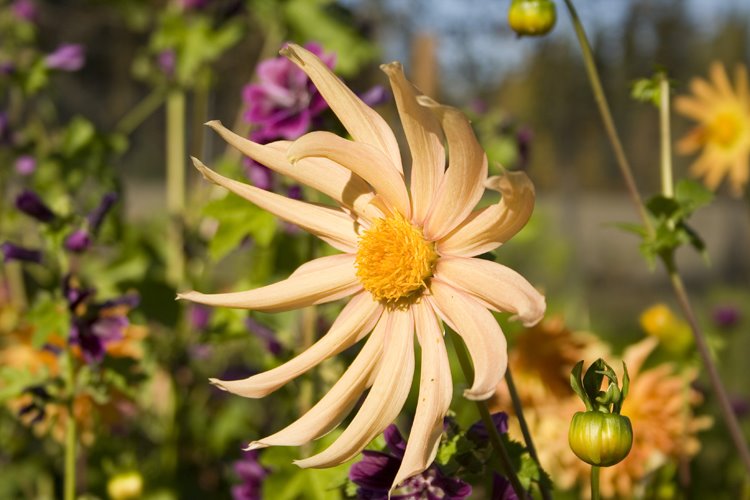
Sunday was a day of harvesting. In the morning Inari picked vegetables from our garden (a plot in the community garden) while I took photos of flowers. It was a tough year for us amateur farmers, but we did manage to get large crops of potatoes, carrots, and peas.


In the afternoon we went to the local raspberry farm and came home with 7 pounds of raspberries for $21. That doesn't count the pound of raspberries that found their way into my stomach! Its really easy to get greedy and take more berries than you need, but then again, blueberry and raspberry pies are a much needed treat during the cold winter days.

04 September 2006

Fall colors

I told Inari in an e-mail the other day that the plants in Greenland don't exhibit fall colors and that they just fade from green to brown. I was wrong, I just didn't realize it when it was cloudy and the light was bad. Though not as spectacular as places that have large oaks and maples, its still quite beautiful. I snapped these photos today in Kangerlussuaq; we have a two-day layover and will fly back to the states on Wednesday.


Rapids

There is water everywhere in Greenland. As my friend pointed out, there isn't really a coastline, its more like a gradual transition from land to water. Traveling from the inland ice toward the coast you see bedrock with lots of lakes, that gradually changes into ocean with lots of islands. This means that there are lots of streams, such as this one located 2 km east of Ilulissat.

The ocean at night

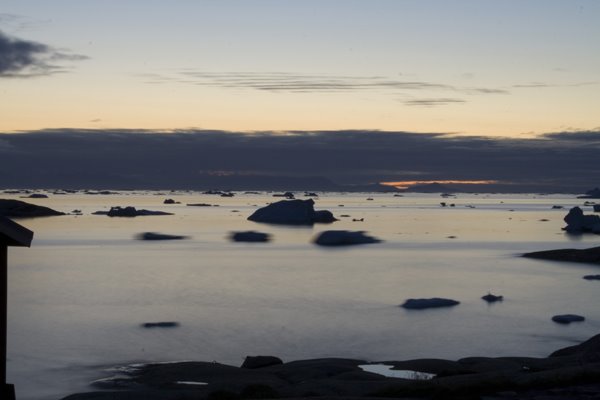
One night I decide to take a walk to take some photos of the sunset. While walking down the road a stranger started talking to me. I ended up following him and two of his friends to a bar to listen to some musicians from Uummannaq. The music was okay, the bar was smoky, and the conversation was spoken in broken English. Anyway, it was an interesting experience. I didn’t manage to take any photos of the sunset, but after leaving the bar I managed to snap a couple of nice photos of the ocean at night.


Dogs and Icebergs

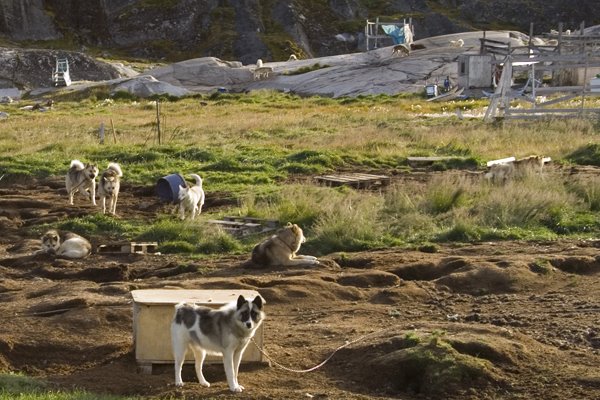
A photo album of Ilulissat wouldn't be complete without photos of sled dogs and icebergs. Lots of them. Though these photos aren't great I feel obligated to post them anyway.


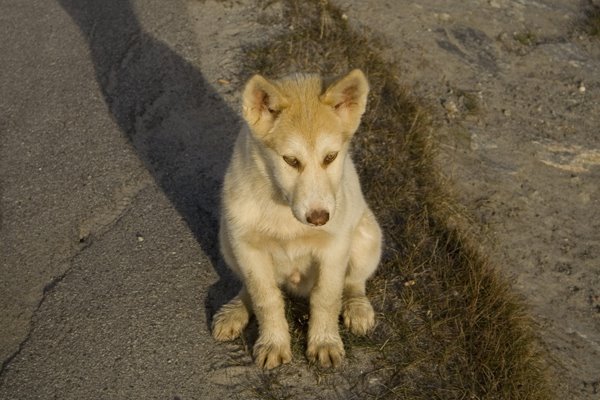
There are over 5000 dogs in Ilulissat; the majority of them are kept on short chains for most of the summer (sad). Only the females that are in heat and the puppies are not on chains. They're actually allowed to roam freely throughout the town. Of course the puppies are quite cute and I always had to play with them, so on many occasions I had a small troupe of dogs following me around town.

Base camp

We decided that it would be cheaper and logistically simpler to stay in Ilulissat instead of camping out by the ice stream. The result is that I now know my way around town - not that its very difficult. Here are a few pictures of the city.


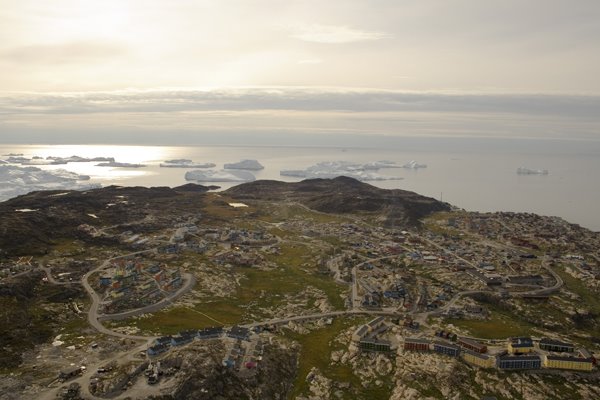
Ilulissat viewed from a helicopter. The town center is to the right of the picture near the water front. Most of the green areas between the neighborhoods are large dog yards.


Looking north from our hotel (towards the harbor).


Soccer seems to be the most popular sport, at least in summer. This dirt soccer field is almost always being used.

Images of Greenland

On this latest trip to Greenland I've had lots of free time, much of which I've spent walking around taking photos. I thought I'd post some of my favorites - though they're not exactly a "best of the best" collection. Besides, I'm not really a good photographer - yet. I took 500 photos over the past two weeks. If I keep up that pace maybe in a couple of years I'll actually know what I'm doing.


This first picture I took in Kangerlussuaq the same day that I saw the cormorant (see the previous post). I found a nice rock outcrop that had large ripple marks on the surface; many of the small depressions were filled with water. I wonder if this is what the moon would like if it had an atmosphere?

23 August 2006

Mystery bird


I was just out testing my new camera in Kangerlussuaq when I stumbled across this cool bird. I haven't been able to figure out what it is - any ideas? For scale, that pipe next to the bird is about a half a meter off the ground.

19 August 2006

Sweet corn and puppy dogs


I've forgotten how miserable life can be in Minnesota during the summer. Sure, the temperature is only in the 70's (20's C), but the humidity is awful. I'm becoming a true northerner - a person who thinks that Minnesota is a southern state. I must also admit that I've forgotten how beautiful the countryside is near Maple Grove (my home town): rolling "hills", farms, and many different deciduous trees. It's nice to see something other than spruce, aspen, or birch. And the constant sound of crickets brings back childhood memories of summer.

One great thing about Minnesota is the sweet corn. Minnesotans are serious about their sweet corn, especially in rural areas. They know when and where to buy sweet corn from Farmer A, and when and where to buy it from Farmer B. They discuss it much in the same way that Alaskans tell friends where are the best places to pick blueberries and catch salmon. Lucky for me, my visit corresponded with sweet corn season. You can't describe how good fresh sweet corn is, you just have to try it.

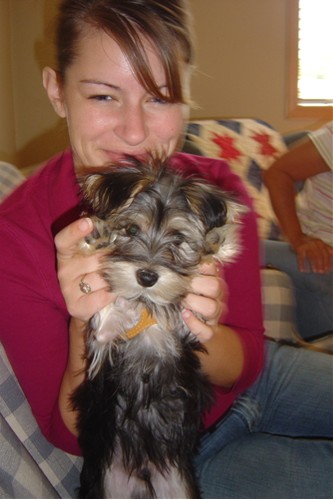
The second highlight of my trip has been meeting my sister Carrie's new dog Frankie. He's a morky - half yorkshire terrier, half maltese. I wish I had a dog, though I'd rather have something larger than Frankie, who weighs in at a whopping 5 lbs (2 kg) and will probably be less than 9 lbs (4 kg) when he's fully grown.

17 August 2006

The first signs of fall

On my ride to work today I noticed that the leaves on a few trees were just turning yellow. I even saw one small plant (a dwarf maple?) that had already turned completely red. And the nights are rapidly getting darker - its now possible to sleep like a normal human being! I'm returning to Greenland tonight (and stopping in Minnesota on the way) for about three weeks; I realized last night that by the time I'm back in Fairbanks the leaves will be in full color and there will be almost 12 hours of darkness. It feels like green up just happened. Thankfully I'm not dreading winter; I'm starting to look forward to it - and skiing and the stars and the aurora.

Enjoy the rest of your summer. I'll be back blogging in three weeks.

11 August 2006

Anaktuvuk Pass: "place of caribou droppings"

The highlight of the trip, for me anyway, may have been the finish. Hiking into a remote village at the end of a two week trip is exciting. You can almost smell the non-dehydrated food and feel the warmth of buildings from miles away. I felt like I was racing to the finish line as we approach the village.


Yet I was a little nervous, I wasn't sure what to expect of Anaktuvuk. At first I felt like an intruder, and I knew that many of the villages in Alaska are known as being rough and not very accepting of outsiders. That was certainly not the case here. The people of Anatuvuk were incredibly friendly. I lost track of how many people on the street came up to us and started talking, asking us about our trip, talking about the upcoming caribou migration, explaining how to make Eskimo band-aids. Caribou soup was being served at the community hall and we were invited to eat some. We were also told that we could come back any time, that they always like having visitors. If only I could get a glaciology position in Anaktuvuk...

The people of Anaktuvuk are Nunamiut Eskimos (inland Eskimos) with a culture very different from the Inupiaq Eskimos (coastal Eskimos). They were a nomadic group that subsisted primarily on caribou and other small game. Supposedly they were the last nomads in North America to "settle down" - Anaktuvuk was not formed until the 1950s. Its amazing to think of the changes that have occurred to these people during the last 50 years. They now have indoor plumbing, oil heating, and regularly scheduled flights bringing mail and food. They still maintain much of their subsistence ways, but have sadly all but lost their language. Very few people younger than 50 speak Eskimo. Even though almost everybody there speaks English as a first language, they do so with an accent that makes you feel like you're talking to people who speak English as a second language. We were told that the children learn Eskimo in school, but they have little incentive to use it on a daily basis, so what they learn is quickly lost.


Anaktuvuk is isolated, but the people living there certainly are not. Many visit Fairbanks a few times a year, and some are quite worldly. One person we met said that he went to boarding school in Oregon during the 1960s (it used to be that all Alaska natives were sent to boarding school far from home, to Mt. Edgecumbe in southeast Alaska, Oregon, or even Oklahoma!). After boarding school he enlisted in the military because he had a low draft number and would have been drafted anyway. He just narrowly avoided being sent to Vietnam (he loved Nixon because of that), but instead spent several years in Germany. During that time he traveled around and saw many places in Europe. I could sit and listen to him tell stories for hours. Actually, many of the people there were good storytellers; telling stories is an important part of their culture, as they didn't have written language until recently.

From the Haul Road to Anaktuvuk Pass

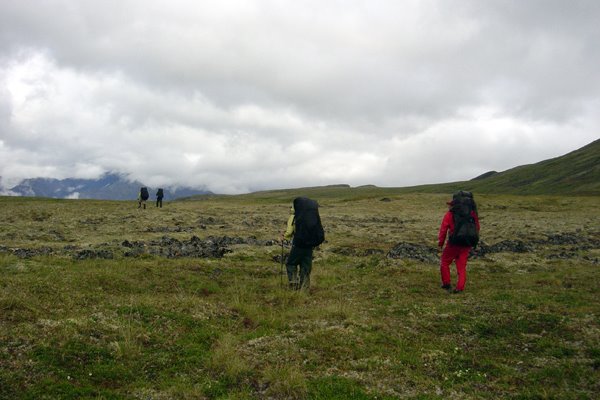
Last Friday we (me, Inari, Jason S., Elvira, and Syosaku) returned from our hiking trip in the Brooks Range. We had hiked some 60 miles (100 km) in 12 days from the Haul Road - the supply road for Prudhoe Bay - to the village of Anaktuvuk Pass. We went over several passes and past several prominent features: Kinnorutin Pass, Mount Doonerak, the Gates of the Arctic (Frigid Crags and Boreal Mountain), the Valley of the Precipices, and Ernie Pass. As Syosaku said, the scenery there isn't majestic like Denali National Park, but its very beautiful in its own arctic way.


At times the trip was quite difficult - heavy packs, wet feet, too much rain, mosquitoes, bushwhacking. And even though those things are too be expected on a hiking trip in Alaska, we were all still happy to reach our goal of Anaktuvuk Pass. After returning home we went through our photos almost immediately, and I think its safe to say that I wasn't the only one contemplating my next arctic trip.


Keep an eye on Elvira's blog (the link on the right). Rumor has it that she's planning a "Brook Range Blogging Extravaganza".

09 August 2006

Changes at NASA

Maybe this isn't news anymore, but I just learned that NASA quietly changed its mission statement to align more closely with the goals of the Bush administration. The mission statement once read: "to understand and protect our home planet; to explore the universe and search for life; to inspire the next generation of explorers... as only NASA can". The statement has been rewritten to read: "to pioneer the future in space exploration, scientific discovery and aeronautics research". This is very disconcerting to researchers who are studying climate change, as it means that a major funding agency is changing its focus away from a potential disaster on our home planet. Was this change an attempt to draw attention away from global warming, or was it just an honest attempt to more clearly seperate the various funding agencies (e.g., NASA, the National Science Foundation, the National Oceanic and Atmosperic Administration)?